
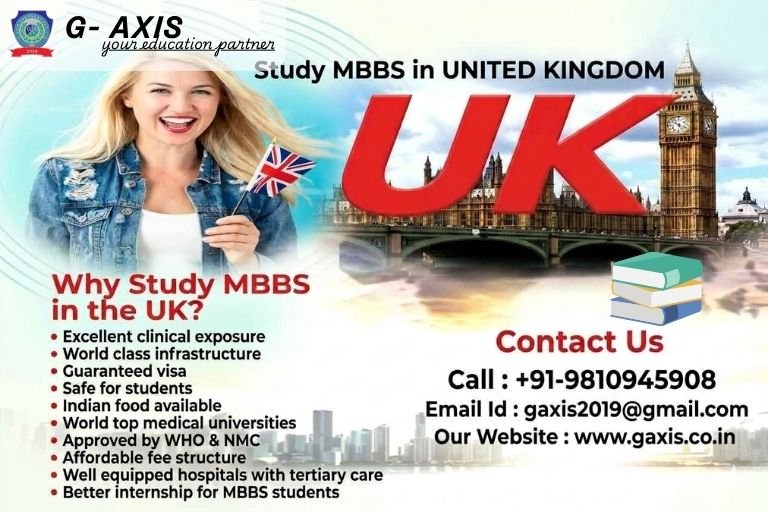
The United Kingdom (UK) is a sovereign island nation in Northwestern Europe, officially known as the United Kingdom of Great Britain and Northern Ireland. its rich history, cultural influence, parliamentary democracy, world-class education system And famous for the Royal Family, iconic landmarks like Big Ben and Tower Bridge, prestigious universities (Oxford/Cambridge), literature (Shakespeare, Harry Potter), and a vibrant music scene. The UK is generally a safe country, with low violent crime rates for visitors and residents, ranking among the top 100 safest countries globally. The United States is generally the top country of origin for international visitors to the UK by market value and frequently.
The United Kingdom is an excellent destination for higher education, renowned for its top-ranked universities, shorter degree durations, and high employability. It offers a diverse, multicultural environment with post-study work opportunities. However, students should consider high tuition fees and living costs. Pursuing an MBBS in the UK is an excellent choice for international students, offering world-class training and global recognition. Programs typically last 4–6 years.
1. Official Name: United Kingdom of Great Britain and Northern Ireland
2. Location: Northwestern Europe, off the coast of the continental mainland, between the North Atlantic Ocean and the North Sea
3. Area: 243,610 km²
4. Capital: London, situated in southeastern England
5. Currency: Pound sterling
6. Languages: English is the de facto official language.
7. Economy: : The UK has a highly developed, market-oriented economy and is currently the sixth-largest in the world by nominal GDP. It is a global hub for finance, particularly through the City of London.
8. Total Population: Estimated at approximately 69,281,437 as of 2024
Choosing the United Kingdom for education and travel are good, it is a most popular destination in the world, Here are the top 10 reasons to choose the UK.
1. World-Class Universities: The UK is home to some of the highest-ranked universities globally, including the University of Oxford and University of Cambridge.
2. Internationally Recognized Qualifications: Degrees from the UK are held in high regard by employers worldwide.
3. Shorter Course Duration: Undergraduate and master’s programs are typically shorter than in the US or Canada, allowing for faster completion and lower overall living costs.
4. Post-Study Work Opportunities: The “Graduate Route” allows international students to work or look for work in the UK for two years after graduating.
5. Cultural Diversity and Heritage: The UK is a multicultural society with a rich history, providing a vibrant and welcoming environment for international students.
6. Quality Education System: The UK offers high-quality teaching, research-driven study, and a wide range of academic programs.
7. Improve Language Skills: As the home of English, studying in the UK provides an ideal environment for improving proficiency in the language.
8. Financial Assistance and Scholarships: Many universities offer scholarships, grants, and bursaries for international students.
9. Central Location for Travel: Its location makes it easy to travel to European countries, offering opportunities for exploration.
10. Excellent Student Support: UK universities offer comprehensive support services, including specialized help for international students regarding visas, housing, and well-being.
1. Early Clinical Experience: Students gain hands-on training in NHS hospitals starting early in their studies, allowing them to work in real clinical environments.
2. Shorter Duration: The MBBS program in the UK usually spans 5 to 6 years, which is shorter than medical training in some other countries like the USA.
3. Modern Pedagogy: Programs utilize a mix of problem-based learning, small-group tutorials, and advanced simulation technology to build critical thinking and practical skills.
4. Career Support & Opportunities: The curriculum prepares students for post-graduate exams and provides pathways to work in the UK’s National Health Service
5. International Student Support: Universities offer strong support systems, including scholarships and modern, convenient accommodation, easing the transition for foreign students.
1. Academic Qualifications
2. Age Requirement: Students must be at least 17 years old at the time of admission.
3. Entrance Exams: UCAT , BMAT, NEET
4. English Language Proficiency: An IELTS score of at least 7.0 overall, with no band less than 6.5, is essential. Some universities may accept equivalent scores from TOEFL or Pearson PTE.
| So.No. | Key Information | |
| 1. | University of Oxford | |
| 2. | University of Cambridge | |
| 3. | Imperial College London | |
| 4. | UCL (University College London) | |
| 5. | King’s College London | |
| 6. | University of Edinburgh | |
| 7. | University of Glasgow | |
| 8. | Queen Mary University of London | |
| 9. | University of Dundee | |
| 10. | University of Manchester |
For MBBS in the UK, you will also have to provide scores of NEET/UKCAT/BMAT/GMSAT. Here are the minimum scores required for MBBS in UK for Indian Students:
| Name of the Test | Minimum Score Required |
| UKCAT | 650 |
| BMAT | 4.5 – 5.0 |
| GAMSAT | 60 – 66 |
| NEET | 50 percentile |
For taking admission to any UK colleges, you will have to appear for the IELTS. The exam will test your listening, speaking, and writing skills. The average cut-off score is 6.5 for most of the top-ranked colleges in the UK.
| So.No. | Top Scholarships |
| 1. | Rhodes Scholarship (University of Oxford): Covers fees and living expenses for 5 years. |
| 2. | Gates Cambridge Scholarship: Covers full cost of study at Cambridge. |
| 3. | Hull York International Medical College Scholarship: Provides financial assistance to international students. |
| 4. | Hull York International Medical College Scholarship: Provides financial assistance to international students. |
| 1. | Phase 1: Pre-Clinical (Years 1-2): Focuses on basic biomedical science, including Anatomy, Physiology, Biochemistry, Genetics, Pharmacology, and Behavioral Science, often using a system-based approach (cardiovascular, renal, nervous systems). |
| 2. | Phase 2: Clinical Practice (Years 3-4): Involves hospital and GP (General Practice) placements, focusing on Internal Medicine, Surgery, Pediatrics, Obstetrics & Gynecology, Psychiatry, and Clinical Pharmacology. |
| 3. | Phase 3: Specialization & Training (Year 5/Final Year): Covers advanced clinical practice, specializing in areas like Orthopedics or Dermatology, and includes the “Preparation for Practice” module, which involves shadowing foundation doctors. |
1. Shortlist Universities: Choose up to 4 medical schools through UCAS.
2. Take Admissions Tests: Register for UCAT/BMAT in advance.
3. Submit Application: Submit UCAS application
4. Interview: Attend Multiple Mini Interviews (MMI).
5. Visa: Apply for a Student Visa.
MBBS in the UK for international students typically costs between £30,000 and £65,000+ per year (approx. ₹31–₹82 Lakhs/year) for tuition, with 5–6 year programs.
1. Accommodation: £400–£800/month (University Halls) or £500–£1,200+ (Private).
2. Groceries: £150–£250/month.
3. Utilities: £30–£50/month.
4. Transport: £50–£100/month.
5. Leisure/Misc: £100–£200/month.
1. Foundation Training: After graduation, you must complete a two-year Foundation Programme (FY1 and FY2) to get full registration with the General Medical Council (GMC).
2. Specialty Training (PG in UK): Graduates can enter core/specialty training (GP, Pediatrics, Radiology, etc.) or undertake PG medical diplomas like MRCP/MRCS to specialize further.
3. Consultant Career: After completing specialty training, you can become a consultant, with earnings potentially exceeding £100,000 annually.
4. Hospital Roles: Junior doctors in the NHS earn between £29,384 and £34,012, with opportunities for high pay in private practice or other medical sectors.
5. Research & Teaching: Opportunities to work at top medical research centers or join academia.
6. Returning to India: Graduates can work in India after completing their PG and registering with the National Medical Commission (NMC).
| So.No. | Key Details | |
| 1. | General Practitioner | |
| 2. | Anaesthetist | |
| 3. | Psychiatrist | |
| 4. | Neurosurgeon | |
| 5. | Plastic Surgeon | |
| 6. | Cardiologist | |
| 7. | Emergency Medicine Doctor | |
| 8. | Consultant in Genitourinary Medicine | |
| 9. | Paediatrician | |
| 10. | Specialty Doctor |
Salaries for doctors in the UK are competitive and provide a good standard of living
Key Salary Information (2026 Data):
1. Foundation Year 1 (FY1 – Internship): £32,000 – £37,000 per year.
2. Foundation Year 2 (FY2): £36,000 – £45,000 per year.
3. Specialty Trainees & SAS Doctors (Mid-Level): £50,000 – £75,000 per year.
4. Consultants & GPs (Senior Level): £100,000 – £150,000+ per year.
5. Monthly Income: A junior doctor often earns £2,600–£3,800/month, while senior doctors may exceed £10,000/month in the private sector.
Contact us for information and VISA apply
can help – fill in your details and we’ll call you back.


Chat Now