
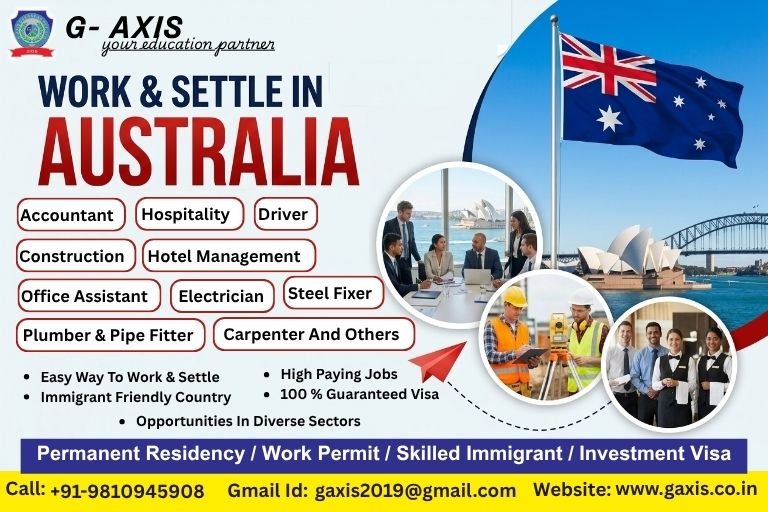
Australia is a country and continent in the Southern Hemisphere located between the Pacific and Indian oceans. Australia is world-renowned for its unique wildlife (kangaroos, koalas), stunning natural landscapes like the Great Barrier Reef and the Outback, and iconic landmarks such as the Sydney Opera House. It is known for a relaxed outdoor lifestyle, surf culture, and vibrant cities, along with a rich Indigenous culture.
Australia is an excellent destination for working and settling due to its high standard of living, strong economy, and robust work-life balance. It offers many pathways for skilled professionals, especially in healthcare, construction, and IT, with 185,000 migration spots.
New Zealand is consistently the top source of visitors to Australia, and in many previous years. Other major visitor markets include China which has seen a rapid recovery—the United States, and the United Kingdom, which all consistently rank among the top countries.
Key Facts
1. Official Name: Commonwealth of Australia
2. Location: Located in the Southern Hemisphere in the region of Oceania, situated between the Indian Ocean to the west and the Pacific Ocean to the east.
3. Area: 7.688 million km²
4. Capital: Canberra
5. Currency: Australian Dollar (AUD).
6. Languages: English is the de facto national language.
7. Economy: Australia is the world’s 14th or 15th largest economy by nominal GDP, with an economy estimated at approximately $1.83–$1.95 trillion.
8. Total Population: approximately 28.4 million
Why should you settle IN Australia?
Here are the top 10 reasons to settle in Australia:
1. High Standard of Living: Australia consistently ranks high on the UN Human Development Index due to excellent infrastructure, safety, and economic stability, offering a comfortable, high-quality life.
2. Robust Healthcare System (Medicare): Residents have access to Medicare, a top-tier public healthcare system providing free or subsidized medical care, including hospital treatment and medicines.
3. Thriving Job Market & High Wages: Australia offers strong employment opportunities and competitive wages, with a high employment rate of 73% for people aged 15-64, often leading to better disposable income.
4. World-Class Education System: With seven universities in the top 100 globally, Australia offers exceptional education for all ages, including public school access and higher education support for residents.
5. Multicultural & Welcoming Society: Approximately 45% of Australians were born overseas or have a parent who was, creating a diverse, inclusive, and tolerant society.
6. Unmatched Outdoor Lifestyle & Climate: Australia offers a sunny climate and a relaxed lifestyle, with easy access to beaches, parks, and nature, promoting a healthy work-life balance.
7. Safe and Stable Environment: With low crime rates and a strong rule of law, Australia is considered a very safe place to live and raise a family, featuring clean, well-maintained cities.
8. Natural Beauty & Biodiversity: Residents can explore unique landscapes, ranging from the Great Barrier Reef to pristine beaches, lush forests, and the Outback.
9. Clear Pathways to Residency & Citizenship: The government provides a transparent, well-regulated immigration system with various skilled migration and family visa options for permanent residency.
10. High Quality of Life (Work-Life Balance): Australians emphasize leisure, family time, and work-life balance, fostering a lower-stress, healthier lifestyle with ample time for recreational activities.
Immigrating to Australia involves identifying a suitable visa pathway most commonly skilled migration, employer sponsorship, or family visas—meeting specific eligibility criteria, and passing a points test.
Key Eligibility Requirements
1. Age: Applicants must be under 45 years of age at the time of invitation.
2. Skills Assessment: A positive skills assessment from the relevant authority is mandatory for the chosen occupation, proving suitability for the role.
3. Points Test: A minimum score of 65 is required, based on factors such as age, English proficiency, work experience, and qualifications.
4. English Language Proficiency: Applicants must demonstrate “competent” English, usually through tests like IELTS or PTE, although some nationalities are exempt.
5. Occupation List: The occupation must be listed on the relevant Skilled Occupation List (SOL) for the visa subclass.
6. Health & Character: Applicants must meet health requirements (medical exam) and character requirements (police clearances).
Permanent Residence (PR) in Australia allows a non-citizen to live, work, and study indefinitely, enjoying most rights of a citizen—including Medicare, social security, and sponsoring family—without being an Australian citizen. PR holders receive a 5-year travel facility and can apply for citizenship after meeting residency requirements.
Key Features & Benefits
1. Indefinite Stay: Live and work anywhere in Australia permanently.
2. Healthcare: Access to Medicare, Australia’s public healthcare system.
3. Education: Children can attend school, and higher education fees are often lower compared to temporary residents.
4. Social Security: Access to social security benefits, usually after a waiting period.
5. Family Sponsorship: Ability to sponsor eligible relatives for permanent residence.
6. Path to Citizenship: Eligibility to apply for Australian citizenship after meeting residence requirements (typically 4 years).
7. Property Ownership: Entitled to purchase property, often with fewer restrictions than temporary visa holders.
1. Age: Applicants must be under 45 years of age at the time the invitation to apply is issued.
2. Skill Assessment: A positive skills assessment from a recognized Australian authority is mandatory, proving your qualifications and work experience match your nominated occupation.
3. Occupation List: Your occupation must be listed on the Medium and Long-term Strategic Skills List (MLTSSL), Short-term Skilled Occupation List (STSOL), or Regional Occupation List (ROL).
4. Points Test: You must score a minimum of 65 points, though higher points (often 80-85) significantly improve invitation chances. Points are awarded for age, English proficiency, work experience, education, and other factors.
5. English Language: Applicants need to demonstrate at least “Competent” English proficiency (e.g., IELTS 6.0 in all components or PTE 50 in all components).
6. Health & Character: You must pass health examinations and provide police clearance certificates from countries lived in.
Working in Australia is generally considered excellent for international workers, offering high minimum wages, a strong economy, and a high quality of life. It offers robust work-life balance, diverse opportunities, and pathways to permanent residency for skilled professionals, particularly in sectors with shortages.
Australia’s most in-demand sectors in 2026 are led by Healthcare & Nursing (especially aged care and midwives), followed by Information Technology (IT), Engineering, Construction, and Education. These industries are driven by population growth and skilled worker shortages, with high demand for roles such as Registered Nurses, Software Engineers, and Project Managers.
| Occupation | |
| IT | |
| Marketing & Sales | |
| Engineering | |
| Hospitality | |
| Healthcare | |
| Accounting & Finance | |
| Human Resources | |
| Construction | |
| Professional and Scientific Services |
The Australian job market currently features roughly 330,000–350,000 open roles, with 1 million+ vacancies anticipated over the next decade.
Key trends include acute shortages in:
1. health and engineering,
2. high demand in aged/disability care,
3. technology,
4. taxation,
5. legal professions.
salaries in Australia are generally high and considered among the best in the world:
Key Salary Information
1. Average Annual Salary: ~AUD 98,500 – AUD 100,000
2. Median Annual Salary: ~AUD 65,000 – AUD 83,000
3. Minimum Wage: AUD 24.10 per hour
4. Monthly Average: ~AUD 7,700 – AUD 8,200
Australian work visa is an official authorization allowing foreign nationals to live and work in Australia,
Australia offers numerous work visa types, primarily categorized into:
1. Temporary (Skilled/Short-Stay)
2. Permanent Pathways.
Key visas include the:
1. Temporary Skill Shortage (subclass 482),
2. Employer Nomination Scheme (186),
3. Working Holiday (417/462),
4. Temporary Graduate (485),
5. Skilled Regional visas.
These allow skilled professionals, young travelers, and specialists to work for 1–5 years or settle permanently.
1. Age: Generally, under 45 years old at the time of application.
2. Skills Assessment: A positive skill assessment for an occupation listed on the relevant skilled occupation list is required.
3. English Language: Competent English proficiency is required (e.g., IELTS, PTE, TOEFL).
4. Sponsorship: Many visas, such as the TSS 482 and ENS 186, require sponsorship by an approved Australian employer.
5. Points Test: For skilled migration, a minimum of 65 points is needed based on age, experience, education, and English skills.
6. Health & Character: Applicants must pass medical exams and provide police clearances.
Australia offers a very high standard of living, frequently ranked among the best in the world, characterized by a relaxed outdoor, beach-focused lifestyle, high safety standards, and excellent public healthcare. Residents enjoy a high average income, vibrant café culture, and strong work-life balance, although this is balanced by a high cost of living.
Key accepts
1. Outdoor Lifestyle & Climate: A warm, temperate climate enables year-round outdoor activities like surfing, hiking, and beach visits, encouraging an active, healthy life.
2. Work-Life Balance: Australians prioritize downtime, with many workplaces offering flexible schedules and generous annual leave.
3. Stunning Natural Beauty: Access to world-class beaches, national parks, and diverse landscapes (from, rainforests to the outback) provides a scenic backdrop for daily life.
4. Strong Economy & High Wages: Australia offers low unemployment and high salaries, providing strong career advancement opportunities, particularly in health, tech, and construction.
5. Quality Healthcare System: Medicare is one of the world’s most efficient and accessible health systems, ensuring residents have access to quality, affordable medical care.
6. Safe and Stable Society: Known as a safe country with a low crime rate, making it an excellent place to raise a family.
7. Multicultural Environment: A welcoming, diverse society where various cultures are celebrated, offering a culinary and social landscape with a wide range of food and cultural festivals.
8. Excellent Education Standards: Australia boasts world-renowned universities and a strong public education system.
9. Unique Coffee & Food Culture: A high-quality café culture (particularly coffee and brunch) is central to socializing, often in vibrant city hubs.
10. Mateship and Friendliness: A relaxed, friendly culture where people are helpful and the “stranger is just a mate you haven’t met yet” mentality prevails.
G-Axis, the world’s top overseas immigration consultancy, provides unbiased immigration services for every client based on their interests and requirements.
Our impeccable services of G-Axis include:
can help – fill in your details and we’ll call you back.



Chat Now