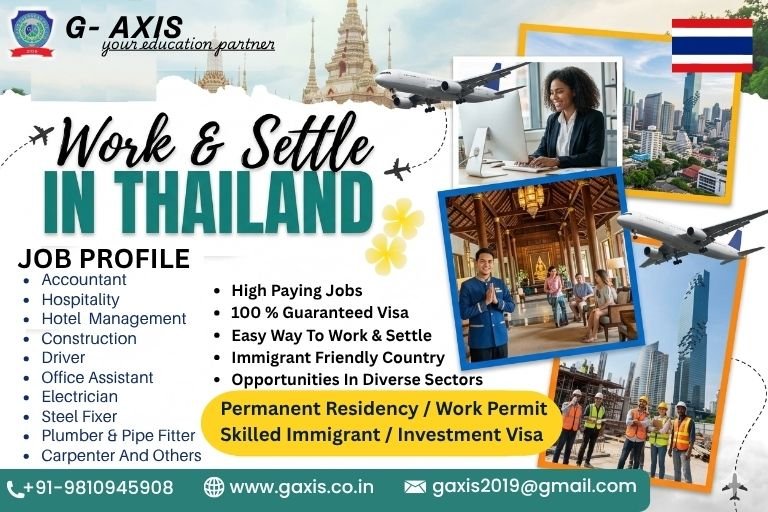
About Thailand
Thailand, officially the Kingdom of Thailand and formerly Siam, is a Southeast Asian nation renowned for its, tropical landscapes, vibrant culture, and Theravada Buddhism. Thailand is an excellent destination for working and settling, offering a low cost of living, high-quality healthcare, and a welcoming culture. It boasts a thriving economy with opportunities in hospitality, teaching, and IT, especially in cities like Bangkok and Chiang Mai.
Thailand is recognized globally for its high cultural influence, ranking 8th in the world and 1st in Asia for cultural heritage in 2024. It is generally ranked around 28th-29th. It is unique for its warm “Land of Smiles” hospitality, traditional Thai massages, lively floating markets, and colorful festivals like Songkran
1. Official Name: Kingdom of Thailand
2. Location: Mainland Southeast Asia, on the Indochinese Peninsula, bordered by Myanmar, Laos, Cambodia, and Malaysia
3. Area: Approximately 513,115–513,120 square kilometers (about 198,000 sq mi)
4. Capital: Bangkok
5. Currency: Thai Baht (THB)
6. Languages: Thai (Official)
7. Economy: A mixed economy transitioning to innovation-driven (Thailand 4.0), focusing on electronics, electric vehicles (EVs), tourism, and smart farming. It is a major exporter in Southeast Asia
8. Total Population: Approximately 66.27 million – 71.58 million (2026 est
A Thailand Residence Permit (Permanent Residency) allows foreign nationals to live permanently in Thailand without needing to renew visas or report every 90 days
Key Aspects of Permanent Residency (PR):
1. Benefits: No more 90-day reporting, simplified work permit processes, permanent stay (book) issuance.
2. Requirements: Must have held a 1-year visa (e.g., Non-B or Marriage) for 3+ consecutive years, show 80,000–100,000 THB monthly income, pass Thai language tests, and pass a criminal check.
3. Application: Applications are usually open for a limited time at the end of the year.
Long-Term Residence in Thailand
Thailand’s Long-Term Resident (LTR) visa offers a 10-year, renewable residency to wealthy individuals, retirees, remote workers, and skilled professionals, featuring tax benefits and simplified 90-day reporting.
What Are the Benefits of the Being a Permanent Resident in Thailand?
Key Benefits of Permanent Residency in Thailand:
1. No More Visa Extensions: Permanent residents do not need to apply for visa extensions or worry about annual renewals.
2. No 90-Day Reporting: You are exempt from the standard 90-day reporting requirement at immigration.
3. Simplified Work Permits: It is easier to obtain a work permit, as employers do not need to meet the standard ratio of four Thai employees per foreign employee.
4. Property Ownership: PR holders can purchase a condominium without needing to transfer funds from abroad. They are also able to register on a Thai “Blue Book” (house registration).
5. Path to Citizenship: After holding PR status for 10 consecutive years, you may apply for Thai naturalization.
6. Document Convenience: Residents receive a “Residence Certificate” and an “Alien Book” (similar to a Thai ID card), easing procedures like opening bank accounts or applying for a driver’s license.
Eligibility Criteria for Permanent Residency in Thailand
1. Visa Status: Must hold a non-immigrant visa at the time of application and have maintained 3 consecutive yearly extensions.
2. Duration: Must have worked or resided in Thailand for at least 3 years.
3. Income Requirement:
Employment/Business: Minimum monthly income of 80,000 THB for at least 2 consecutive years, or personal income tax payment of at least 100,000 THB per year for 2 consecutive years.
Family/Marriage: Minimum monthly income of 30,000 THB if married to a Thai citizen for 5 years.
4. Investment: Investment in Thailand of 3–10 million Thai Baht (depending on specific criteria).
5. Languages: Basic proficiency in speaking and understanding the Thai language is assessed.
Documents Do I Need When I Apply for Thailand Permanent Residency
1. Passport
2. Application Forms
3. Photographs
4. Non-Immigrant Visa
5. Resident Certificate
6. Health Certificate
Employment and Financial Documents
1. Proof of Income/Employment
2. Tax Documents
3. Educational Credentials
Dual citizenship in Thailand
Yes, dual citizenship is generally allowed and recognized in Thailand, meaning you do not have to give up your original nationality when becoming a Thai citizen. Children born to one Thai parent and one foreign parent automatically hold dual nationality. It is popular for dual citizens to use a foreign passport for entry/exit.
Working in Thailand
Working in Thailand requires a Non-Immigrant B Visa and a Work Permit, which employers usually handle. It’s highly regulated, focusing on skilled roles (teaching, management, IT) rather than manual work.
Working in Thailand is generally safe for foreigners, provided you have a valid work permit, visa, and a legitimate contract.
Thailand’s labor market in 2026 is characterized by a dual structure, featuring a high-demand, high-skill sector driven by technology and investment, alongside a large, essential, low-skill sector that is experiencing high turnover and, increasingly, automation.
Top demand Jobs in Thailand
1. Software Developer/Programmer
2. Data Scientist/Analyst
3. Cybersecurity Specialist
4. IT Manager/Systems Manager
5. Cloud Engineer/Architect
6. Doctors
7. Nurses
8. Caregivers (Elderly Care)
9. Physiotherapists
10. Medical Technicians
11. Civil Engineer
12. Electrical/Mechanical Engineer
13. Automation Technicians
14. Supply Chain/Logistics Manager
15. Plant Manager
16. Hotel Manager
17. Chefs/Culinary Professionals
18. Guest Relations Officers
19. Business Analyst
20. Digital Marketing/Creative Manager
Work Visa for Thailand
A Thailand work visa (typically a Non-Immigrant B visa) requires a confirmed job offer, sponsorship from a Thai employer, and an approval letter from the Ministry of Labour. The process involves applying for the visa abroad, obtaining a work permit upon arrival, and paying fees for a 90-day or 1-year stay.
Documents required while applying for Thailand Work Permit
1. Job Offer: You must secure employment with a licensed Thai company that will sponsor your visa.
2. Visa Type: A Non-Immigrant B Visa is required before traveling to Thailand.
3. Work Permit: Once in Thailand, you must obtain a Work Permit from the Ministry of Labour to work legally.
4. Documentation: Required documents include a valid passport (6 months+), employment contract, educational/professional certificates, and a police clearance certificate.
5. Company Requirements: The employer must have at least 2 million THB in capital and a ratio of 4 local employees for every foreign employee
Application Steps:
1. Find a Job: Secure a position with a company that offers visa sponsorship.
2. Apply for Non-B Visa: Apply at the Royal Thai Embassy or Consulate in your home country.
3. Enter Thailand: Use the 90-day visa to enter the country.
4. Get Work Permit: Apply for the Work Permit, which can take ~7 days in Bangkok or up to 2 months elsewhere.
5. Stay Extension: Extend your visa for up to one year after obtaining the work permit.
Lifestyle in Thailand
Life in Thailand is generally relaxed, affordable, and warm, featuring a “mai pen rai” (no worries) attitude, amazing street food, and friendly, polite people. It offers a mix of modern convenience in cities like Bangkok and a slow-paced, community-focused life, all while being a Buddhist-influenced, respectful culture.
1. Cost & Comfort: Low cost of living allows for affordable dining out, massages, and a high quality of life.
2. Food Culture: Food is central to life, with delicious, cheap street food available everywhere 24/7.
3. Pace & People: Life is generally laid-back and calm, characterized by politeness and frequent smiles.
4. Convenience & Transport: High convenience with fast, accessible services, including motorbike taxis, BTS (skytrain), and Tuk-tuks.
5. Climate: Tropical and humid, requiring adaptation to heat, but offering pleasant, cooler weather during the winter season
How can G-Axis Travels help?
G-Axis offers reliable visa services for all countries. Our team of experienced Visa experts will guide you through the process step-by-step, from verifying your documents to the submission of your visa documents to the Thai Embassy. We also have a dedicated call center to answer all your queries regarding your Thailand work visa application.