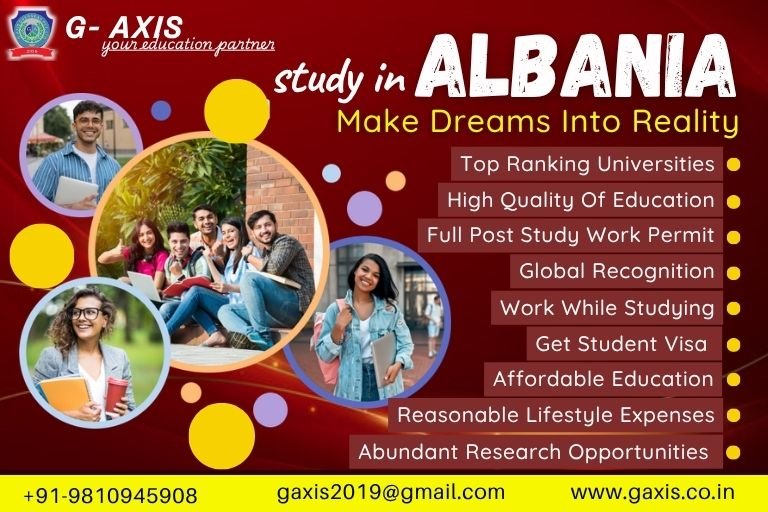
Albania is a small, mountainous country in Southeastern Europe, situated on the Balkan Peninsula along the shores of the Adriatic and Ionian Seas. Albania is renowned for its beautiful blue-green Riviera coastline, affordable Mediterranean tourism, and a rich and complex history spanning from ancient Greek and Roman ruins to Ottoman architecture. Albania is considered one of Europe’s most affordable tourist destinations—far from being expensive. Studying in Albania is increasingly regarded as an excellent and budget-friendly option for international students, particularly for those seeking European educational standards at a lower cost. It serves as an ideal destination for student travelers looking to gain a European experience—at a significantly lower expense compared to neighboring Greece or Italy—while keeping their budget in mind.
1. Official name: Republic of Albania
2. Location: Southeastern Europe, bordered by Montenegro and Kosovo to the north, north Macedonia to the east, Greece to the south, and the Adriatic/Ionian Seas to the west.
3. Area: 28,748 km²
4. Capital: Tirana (Tiranë)
5. Currency: Albanian Lek (ALL)
6. Languages: Albanian (official), with regional minority languages
7. Economy: Albania’s economy is ranked approximately 113th to 115th in the world by nominal GDP, with a total GDP estimated around $27 – $ 30 billion.
8. Total population: population of Albania is approximately 2.4 million
1. Stunning Beaches (Albanian Riviera): Turquoise waters, white sands, and hidden coves, particularly in the south near Ksamil and Dhërmi, are among the best in Europe.
2. Incredible Affordability: Often cited as one of the cheapest countries in Europe, allowing for luxury experiences at a fraction of Western costs.
3. Breathtaking Mountain Landscapes: The Albanian Alps in the north (e.g., Theth and Valbona) provide breathtaking, rugged hiking and scenery.
4. Rich History & UNESCO Sites: Explore ancient ruins at Butrint, Roman/Ottoman history, and stunning UNESCO-listed cities like Gjirokastër and Berat.
5. Extremely Warm Hospitality: Albanians are known for their “Besa” tradition of hospitality, treating guests with immense respect and warmth.
6. Untouched & Authentic: Due to its history of isolation, the country feels raw and authentic, offering a true escape from over-tourism.
7. Vibrant Culinary Scene: Delicious and budget-friendly, Mediterranean and Balkan influences mean fresh, farm-to-table dining, especially in Tirana and spots like Mrizi i Zanave.
8. Vibrant Capital City: Tirana offers a mix of colorful Ottoman architecture, bustling cafes, and historical sites, providing a dynamic cultural experience.
9. Adventure and Hiking: Ideal for adventurers seeking hiking trails, rafting, or exploring, particularly in the pristine northern regions.
10. A “Hidden Gem” Experience: It offers a unique opportunity to explore a country before it becomes a mainstream tourist destination.
1. Affordable Education and Living Costs: Albania is a top, cost-effective alternative to Western Europe, with very low tuition fees and living expenses, making it ideal for international students.
2. European Education Standards: Universities operate within the Bologna Process, ensuring that degrees are recognized across Europe and internationally.
3. English-Taught Programs: Numerous programs, especially at the postgraduate level, are taught in English.
4. Strategic Location and Rich Culture: Situated in the Balkans, Albania offers access to breathtaking, diverse landscapes—from beaches to mountains—and a rich blend of cultural influences, making it an excellent location for travel and exploration.
5. Safe and Welcoming Environment: Albanians are known for their hospitality, providing a safe and welcoming atmosphere for international students.
1. Technology & Engineering: Computer Science, Artificial Intelligence, Software Engineering, Cyber Security, and IT.
2. Medicine & Health Sciences: MBBS (Medicine), Nursing, Physiotherapy, Imaging Technicians, Laboratory Technicians, and Health Care Management.
3. Business & Economics: Business & Technology, Finance & Technology, Economics & Data Science, and Business Administration.
4. Humanities & Natural Sciences: Archaeology, Political Science, Environmental Studies, and Agriculture/Forestry.
The most popular Bachelor disciplines in Albania.
DISCIPLINE | |
Business | |
Finance and Banking | |
Law and Jurisprudence | |
Management | |
Economics | |
Philology | |
Psychology | |
Medicine | |
Administration | |
IT | |
Education and Teaching | |
Political Science | |
Marketing | |
Accounting | |
Tourism | |
Computer Science | |
Mathematics | |
Engineering | |
Sociology | |
Biology | |
Physics | |
Health | |
History | |
International Relations | |
Chemistry |
The most popular Master disciplines in Albania.
DISCIPLINE | |
Finance and Banking | |
Law and Jurisprudence | |
Business | |
Management | |
Philology | |
Medicine | |
Education and Teaching | |
Psychology | |
Accounting | |
Computer Science | |
Marketing | |
Economics | |
Engineering | |
Biology | |
Political Science | |
Tourism | |
Administration | |
Architecture | |
Dentistry | |
Mathematics | |
IT | |
Physics | |
Sociology | |
Technology | |
International Relations |
The most popular PhD disciplines in Albania.
DISCIPLINE | |
Law and Jurisprudence | |
Finance and Banking | |
Economics | |
Architecture | |
Business | |
Education and Teaching | |
Philology | |
Psychology | |
Political Science | |
Computer Science | |
administration | |
Engineering | |
Physics | |
Mathematics | |
Sociology | |
Chemistry | |
Biology | |
PR | |
Building and Construction | |
Management | |
Earth Sciences | |
Sports | |
History | |
Humanities | |
International Relations |
1. University of Tirana (UT)
2. Epoka University
3. Agricultural University of Tirana (UBT)
4. Polytechnic University of Tirana (UPT)
5. University of Vlora “Ismail Qemali”
6. Our Lady of Good Counsel University
7. European University of Tirana (UET)
8. University of Medicine, Tirana
9. Aleksandër Moisiu University of Durrës
10. University of New York Tirana (UNYT)
1. Pre-school [Arsimi parashkollor]: Optional education for children aged 0 to 6, with kindergarten for 3–6 year-olds.
2. Basic Education [Arsimi bazë]: Mandatory nine-year, integrated system for children aged 6 to 16, comprising primary and lower secondary education.
3. Secondary Education:
4. Higher Education: Structured into Bachelor’s (3 years), Master’s (1.5-2 years), and Doctoral (3+ years) levels, with many universities offering programs in English, particularly at the postgraduate level.
1. Academic: Completed Secondary Education (10+2) for Bachelor’s or a related undergraduate degree for Master’s programs.
2. Average Grade: Minimum requirements typically apply (e.g., often a minimum 6.5 out of 10 grade point average, though specific programs may require an 8.0).
3. Age Limit: Some institutions require applicants to be under 23 years of age for bachelor’s degrees.
4. Language Proficiency: Proficiency in English or Albanian is required (e.g., TOEFL/IELTS for English-taught programs), though some programs might not require tests like IELTS.
When to Apply
1. Intake: The primary intake is in September, with some options for winter semesters.
2. Deadlines: Applications generally open in the spring, with deadlines often extending through late summer (August/September), though it is advised to apply early.
3. Visa Processing: Student visas can take 15–30 days to process, so apply as soon as you receive your offer letter.
How to Apply (Step-by-Step)
1. Select University & Course: Choose from universities like the University of Tirana or Polytechnic University of Tirana.
2. Submit University Application: Apply directly through the university portal with required documents (transcripts, passport, CV).
3. Receive Acceptance Letter: The university will provide an official letter of acceptance.
4. Apply for Type D Visa: Apply online for an Albanian e-Visa or at the nearest Albanian Embassy.
5. Residence Permit: Upon arrival, you must apply for a residence permit within 30 days.
1. Academic Documents: Official high school diplomas and transcripts, or university diplomas, generally requiring translation.
2. Document Recognition (Nostrification): All foreign educational documents must be recognized by the Albanian Center for Educational Services (QSHA).
3. Language Proficiency: Proficiency in Albanian or English is necessary. Programs often accept IELTS (5.5-6.0) or TOEFL for English-taught courses.
4. Visa Application: Applicants from many countries require a Type D long-stay visa to enter and study, usually for stays exceeding 90 days.
5. Student Residence Permit: Upon arrival, students must apply for a residence permit.
6. Financial & Health Evidence: Proof of funds for tuition fees and living expenses, along with private health insurance, is mandatory.
7. Application Fees & Documents: A completed application form, passport photos, a copy of the passport, and sometimes a CV or letter of intent.
1. Albanian Government Scholarships: Provided through the Ministry of Education for foreign nationals, usually offering tuition coverage, accommodation, and sometimes a stipend.
2. Erasmus+ Mobility Scholarships: Available for international students for short- or long-term studies, covering tuition and living costs.
3. CEEPUS (Central European Exchange Programme): Supports students from central and southeastern Europe to study at Albanian institutions.
4. Albanian University Excellence Program: Targets high-performing students to join their programs, aiming for academic excellence.
5. Western Balkans University Scholarships: Specialized scholarships offered in collaboration with recruiters like Studylinks International.
Part-time work in Albania is a good option for students, offering abundant opportunities in service
1. Hospitality
2. Tourism
3. Hotel Staff
4. English Tutoring
5. Digital & Remote Work
Tuition Fees in Albania
1. Bachelor’s Programs: Roughly €1,000 – €4,000 per year.
2. Master’s Programs: Roughly €1,500 – €6,000 per year.
3. Competitive Fields (Medicine/Arts): Higher, with overall costs ranging from €2,000–€5,200 per year.
4. Deposit: A 1,000 [currency unspecified] deposit is typically required upon admission.
Cost of Living in Albania
1. Accommodation: City Center (1 bedroom): €200–€400 per month, Outside Center (1 bedroom): €150–€300 per month.
2. Utilities (Electricity, Water, Gas): ~€50–€125 per month.
3. Food & Groceries: €200–€250 per month for a couple.
4. Transportation: €30–€50 per month for a bus pass/gas.
5. Internet/Phone: ~€27 per month.
1. Software Developer/Engineer
2. IT Specialist/System Administrator
3. Web Developer
4. Data Analyst/Data Scientist
5. DevOps Engineer
6. Machine Learning Engineer
7. Accountant/Bookkeeper
8. Financial Analyst
9. Human Resources Specialist
10. Sales Representative/Manager
11. Civil Engineer
12. Electrical Engineer
13. Medical Doctor/Specialist
14. Teacher/Language Educator
15. Tourism/Hospitality Manager
1. Cost of Living: Albania is highly affordable compared to Western Europe, with cheap public transportation and food options.
2. Social Life & Food: Popular student activities include socializing at cafes, playing sports, and eating inexpensive, local, and tasty snacks like burek.
3. Campus Life & Education: Universities in major cities like Tirana offer modern, well-equipped campuses with various extracurricular clubs (arts, sports, debate).
4. Employment Opportunities: An expanding economy with a booming tourism sector allows international students to find part-time jobs.
5. Hospitality & Culture: Albanians are known for their hospitality, making it easy for international students to feel welcome and safe.
Contact us for more information & visa apply
can help – fill in your details and we’ll call you back.


Chat Now