Serbia, officially the Republic of Serbia, is a landlocked country in Southeastern and Central Europe, situated in the central Balkans and the southern Pannonian Plain. Serbia is known for its rich history as a crossroads between East and West, featuring significant medieval Orthodox monasteries, vibrant nightlife in Belgrade, and renowned hospitality. Serbia is generally considered an affordable and budget-friendly destination, especially compared to Western Europe.
Serbia is a good and increasingly popular destination for international students, offering high-quality education, particularly in IT, engineering, and medicine. Serbia is generally safe for tourists and has a low violent crime rate, making it a welcoming destination. Indian students are increasingly choosing Serbia for higher education due to low-cost, high-quality English-taught programs in medicine, IT, and engineering. Many visitors and students also come from regional Balkan neighbors, while the country acts as a popular, budget-friendly destination for students holding UK visas.
1. Official name: Republic of Serbia
2. Location: Southeastern and Central Europe, Balkan Peninsula. Landlocked. Borders Hungary, Romania, Bulgaria, North Macedonia, Croatia, Bosnia and Herzegovina, and Montenegro.
3. Area: 88,499 km²
4. Capital: Belgrade
5. Currency: Serbian Dinar (RSD)
6. Languages: Serbian (Official)
7. Economy: Serbia is an upper-middle-income economy with a nominal GDP estimated at roughly $112 billion, ranking around 70th–73rd globally, The country is considered a growing, service-based economy with a 3.6%–3.9% growth rate and a GDP per capita of over $13,500 ($30,000+ PPP).
8. Total population: approximately 6.58 to 6.6 million
1. Exceptional Hospitality: Serbians are renowned for being welcoming, friendly, and open-armed, frequently treating visitors like family and boasting a highly tolerant society.
2. Incredible Affordability: As an affordable European destination, visitors can enjoy quality accommodation, delicious food, and travel for significantly lower costs than in Western Europe.
3. Vibrant Nightlife and Festivals: Belgrade is famous for its nightlife, specifically summer boat parties (“splavovi”), while Novi Sad hosts the world-famous EXIT Festival.
4. Rich History and Culture: The country offers a blend of Roman, Byzantine, and Ottoman history, with incredible sites like the Kalemegdan Fortress, Nis Fortress, and ancient monasteries.
5. Delicious Cuisine: Serbian food is hearty and flavorful, blending Eastern and Western influences—must-tries include ćevapi (grilled meat), ajvar (pepper spread), and rakija (fruit brandy).
6. Diverse Natural Beauty: From the mountainous beauty of Tara National Park and Kopaonik to the dramatic Iron Gates gorge along the Danube, Serbia offers varied landscapes for hiking and nature lovers.
7. Strategic Location in Europe: Located at the crossroads of Europe, Serbia is an ideal base for travel and business, providing easy access to neighbors like Montenegro, Bulgaria, and Hungary.
8. Unique Natural Wonders: The country features unique sights such as Djavolja Varos (Devil’s Town) and the stunning, scenic meanders of the Uvac River.
9. Growing Tech and Business Sector: Belgrade and Novi Sad have become prominent European IT hubs, attracting digital nomads and entrepreneurs with competitive operating costs.
10. Active Wellness and Spa Tourism: Serbia boasts over 50 spa and health resorts (e.g., Vrnjačka Banja), offering relaxation and therapeutic treatments at affordable rates.
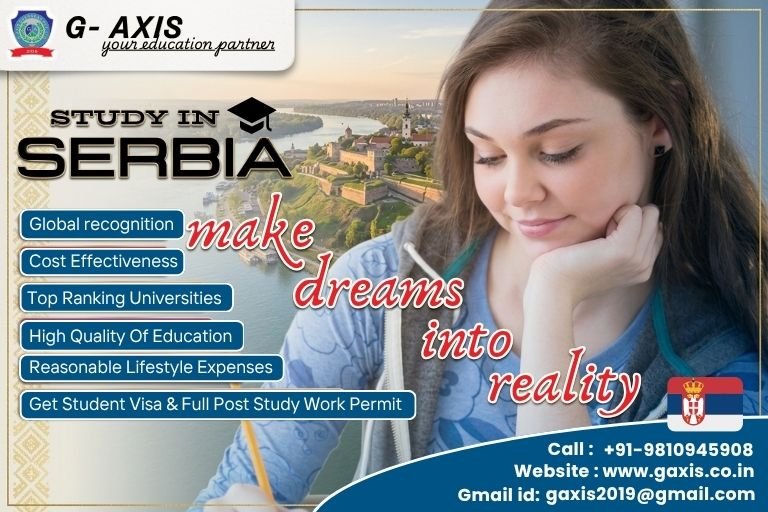
1. High-Quality Education: Serbia has 18 universities, including top-ranked institutions like the University of Belgrade and the University of Novi Sad, which are featured on the Shanghai List. Degrees are recognized internationally and align with the European Higher Education Area (Bologna Process).
2. Affordable Tuition and Living: Compared to other European countries, tuition fees are low, starting as low as €500 per year for some private programs to roughly €2,500 for others, with very reasonable living costs.
3. English-Taught Programs: Many universities offer bachelors, masters, and PhD programs fully or partially taught in English, particularly in competitive fields like medicine, dentistry, and engineering.
4. Central European Location & Culture: Situated in the heart of the Balkans, Serbia offers easy access to neighboring European countries. Students can experience a unique blend of East and West, with rich history, UNESCO World Heritage sites, and vibrant city life in places like Belgrade and Novi Sad.
5. Welcoming and Safe Environment: Serbia is known for its hospitality and warm, friendly people. The country is considered safe for international students, with many student organizations and a vibrant, lively student culture.
1. University of Belgrade (Belgrade): The oldest and largest, ranked as the best in Serbia, offering numerous English-language courses and strong research facilities.
2. University of Novi Sad (Novi Sad): Highly regarded for computer science, agriculture, and a vibrant, international student life in Vojvodina.
3. University of Niš (Niš): Growing in popularity for engineering, education, and medicine, offering quality education in southern Serbia.
4. University of Kragujevac (Kragujevac): Known for strong engineering and medical faculties, with specialized study programs for foreign students.
5. University of Arts (Belgrade): A premier institution for music, drama, and fine arts in the capital.
6. Singidunum University (Belgrade): A top private institution providing modern, market-oriented programs in tourism, economics, and IT.
7. State University of Novi Pazar (Novi Pazar): A younger, modern university providing diverse programs in a diverse cultural setting.
8. Metropolitan University (Belgrade): Specialized in IT, information technologies, and digital arts, popular among tech-oriented international students.
9. University of Defence (Belgrade): Houses the Military Medical Academy, offering high-level medical programs.
10. Union University (Belgrade): Offers recognized programs, particularly strong in law and computer science.
Structure of Education in Serbia
1. Preschool Education: Compulsory 6-month preparatory program at age 5-6, plus voluntary nursery/kindergarten (6 months to 5 years).
2. Primary Education: Compulsory, free, and lasts 8 years (split into 1st-4th grade/class teacher, 5th-8th grade/subject teachers).
3. Secondary Education: Not compulsory but free, usually starting around age 15. Options include:
4. Higher Education: Provided by universities and colleges.
5. Adult Education: Programs for vocational training and life-long learning exist.
1. Engineering & Technology: Civil, Mechanical, Electrical Engineering, Software, and Data Engineering.
2. Medicine & Health Sciences: Medicine, Dentistry, Pharmacy, and Nursing (often with clinical practice).
3. IT & Computer Science: Information Technologies, Applied Informatics.
4. Social Sciences & Business: Law, Economics, Management, Tourism, and Hospitality.
5. Humanities & Arts: Digital Arts, English Language and Literature, Philology.
So.No. | When to Apply |
1. | Bachelor’s Programs: Applications generally open in June. |
2. | Master’s/PhD Programs: Usually begin in September or October. |
3. | Deadlines: Vary by institution, but are typically around June and July for the upcoming semester. It is recommended to apply several months in advance. |
So.No. | How to Apply (Steps) |
1. | Select a Program and Contact the University: Find your course and contact the university’s international office, which handles applications. |
2. | Gather Required Documents: Prepare your application, which typically includes |
3. | Completed application form. |
4. | Passport copy (valid for at least 90 days after departure) |
5. | High school diploma or university transcript (translated). |
6. | Passport-sized photographs. |
7. | Proof of English/Serbian language proficiency (e.g., IELTS/TOEFL). |
8. | Submit the Application: Submit your documents directly to the university. |
9. | Obtain a Visa (D-Visa): Most international students need a long-stay D-visa for education. This requires an invitation letter from the Serbian Ministry of Education or the school, proof of funds, and insurance. |
10. | Temporary Residence: If staying longer than 90 days, apply for a temporary residence permit upon arrival (takes about 3 weeks). |
So.No. | Scholarships To Study In Serbia |
1. | World in Serbia Scholarship: A prominent program for international students, which often covers full tuition, accommodation in university dorms, a monthly stipend, and health insurance. |
2. | Bilateral Agreements Scholarships: The Serbian Ministry of Education, Science and Technological Development awards scholarships annually based on agreements between Serbia and other countries. These include free training, accommodation, food, and a 15,000 dinar monthly allowance. |
3. | Erasmus+ Credit Mobility: Multiple Serbian universities (e.g., Belgrade, Arts in Belgrade, Novi Sad) participate in the Erasmus+ program, offering full scholarships for mobility at all levels. |
4. | Erasmus Mundus Joint Master’s Degree (EMJMDS): This scholarship offers comprehensive support for international students pursuing a Master’s degree in Serbia, including travel and accommodation. |
5. | Visegrad Scholarship Program: A merit-based scholarship available for students within the Visegrad Group region and other designated countries. |
So.No. | Part-Time Work in Serbia for students |
1. | Delivery & Logistics |
2. | Waiters |
3. | Hospitality & Service |
4. | Warehouse Worker |
The most popular Master disciplines in Serbia.
DISCIPLINE | |
Computer Science | |
IT | |
Economics | |
Law and Jurisprudence | |
Management | |
Arts | |
Engineering | |
Education and Teaching | |
Business | |
Finance and Banking | |
Health | |
Sports | |
Programming | |
Design | |
Administration | |
Biology | |
Psychology | |
Philology | |
Physics | |
Mathematics | |
Medicine | |
Earth Sciences | |
Agriculture | |
Chemistry | |
Technology |
The most popular PhD disciplines in Serbia.
DISCIPLINE | |
Computer Science | |
IT | |
Law and Jurisprudence | |
Management | |
Economics | |
Arts | |
Engineering | |
Programming | |
Business | |
Finance and Banking | |
Education and Teaching | |
Medicine | |
Health | |
Sports | |
Philology | |
Psychology | |
Biology | |
Physics | |
Mathematics | |
Tourism | |
Architecture | |
Chemistry | |
Natural Sciences | |
Dentistry | |
Design |
1. Public Universities: Generally cost €2,000–€5,000 per year, with humanities being cheaper and technical/medical programs higher.
2. Medical/MBBS Programs: Fees are competitive, often between €5,000–€8,000 annually, such as the University of Niš (€6,000) or University of Kragujevac (€5,000).
3. Private Universities: Tuition fees can be higher, generally starting from €7,000 per year.
Cost of Living
1. Accommodation: Shared rooms in student dormitories cost roughly €100/month, while private apartments in cities like Belgrade can cost around €300+ per month.
2. Food & Groceries: Approximately €150–€250 per month.
3. Transportation: A student monthly pass is cheap, usually costing around €10–€20.
4. Total Monthly Expenses: Most international students can live comfortably for about €500-€600/month.
1. Software Developer / IT Specialist (Tech & Gaming): With a booming tech sector, roles in software engineering, cybersecurity, and AI are in high demand.
2. Data Analyst / Business Analyst: Companies are seeking professionals to analyze market trends and develop financial strategies.
3. Civil/Mechanical Engineer (Infrastructure & Manufacturing): As Serbia invests in infrastructure, there is a high need for engineers in manufacturing and construction.
4. Digital Marketing Specialist: With businesses expanding their online presence, roles in digital marketing are highly sought after.
5. Project Manager: Common in multinational corporations (MNCs) located in Belgrade, focusing on optimizing business operations.
6. Accountant / Financial Auditor: Essential in the evolving financial and corporate sector in cities like Belgrade and Novi Sad.
7. Language Teacher / Trainer: High demand for English, German, and other language instructors in private schools and universities.
8. Logistics & Supply Chain Coordinator: With Serbia’s growth as a logistics hub, roles in warehouse management and distribution are expanding.
9. Tourism & Hospitality Manager: Growing opportunities in luxury hotels, tour organizing, and event management.
10. HR Specialist / Talent Acquisition: Many companies are looking for professionals to handle recruitment and organizational development.
1. Vibrant Café Culture and Social Life: Serbia has a strong, welcoming culture centered around socializing in cafés and restaurants, which are often affordable (a full meal can cost around €10). Students spend considerable time in these spots to connect and unwind.
2. Budget-Friendly Living and Education: The cost of living is among the lowest in Europe, allowing for an affordable experience. Tuition fees are generally low (e.g., €3000–€5000 for some programs), and student accommodation in hostels or PGs is often available for €100–€200 per month.
3. Active Nightlife and Events: Cities like Belgrade are renowned for their intense nightlife, offering numerous bars, clubs, and music venues that attract locals and international students alike.
4. Thriving Student Community and Housing: Many students live in dormitories, which are described as lively environments that facilitate integration and provide a great, social atmosphere to make friends.
5. Quality Education in English: Major universities (such as Belgrade, Novi Sad, and Niš) offer English-medium, internationally recognized programs, particularly in medicine, dentistry, and pharmacy, with a strong focus on practical experience.
Thanks and good luck!
Contact us for more information and visa apply
can help – fill in your details and we’ll call you back.


Chat Now