Montenegro is a sovereign country situated on the Balkan Peninsula in Southeastern Europe, known for its magnificent mountains, medieval villages, and Adriatic coastline. Montenegro is considered an extremely safe country for tourists and is often ranked among the safest nations in the Balkans, boasting a low violent crime rate. Generally, Montenegro is regarded as a mid-range—and increasingly affordable—European tourist destination, offering better value than Western Europe or neighboring Croatia. Montenegro is renowned for its spectacular landscapes, where rugged limestone mountains plunge directly into the Adriatic Sea, particularly in the Bay of Kotor.
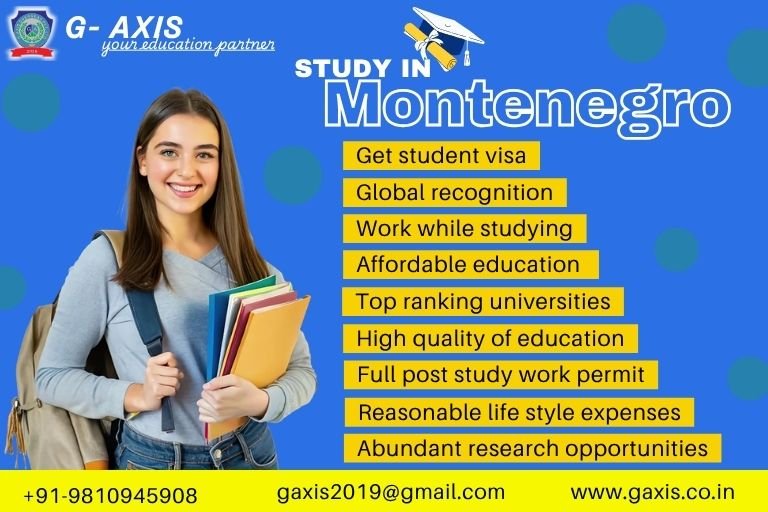
Studying in Montenegro is considered an excellent, affordable, and safe option, especially for European students seeking a beautiful European destination with expanding programs in tourism, business, and medicine. Due to its cultural significance, Montenegro serves as a high-intensity tourist destination for visitors from regions such as Serbia, Croatia, and Albania.
1. Official name: Montenegro (Crna Gora)
2. Location: Montenegro is a small country in Southeastern Europe located on the Adriatic coast of the Balkan Peninsula, bordered by Croatia, Bosnia, Serbia, Kosovo, and Albania.
3. Area: Approximately 13,812 km² (5,333 sq mi)
4. Capital: Podgorica
5. Currency: Euro (€)
6. Languages: Montenegrin (official); Serbian, Bosnian, Albanian, and Croatian are also used.
7. Economy: Montenegro has a small, service-based economy (largely tourism) ranked around the 158th-159th largest in the world by nominal GDP.
8. Total population: Estimated at approximately 620,000–625,000 inhabitants
1. Bay of Kotor: Known as Europe’s southernmost “fjord,” this UNESCO World Heritage Site offers dramatic scenery, tranquil waters, and charming, historic towns like Kotor and Perast.
2. Untouched Nature & National Parks: Montenegro translates to “Black Mountain.” With five national parks (including Durmitor), it offers breathtaking, rugged scenery, including Europe’s deepest canyon, the Tara River Canyon.
3. Stunning Adriatic Coastline: Enjoy over 100 stunning beaches, ranging from bustling sandy spots in Budva to secluded bays, many boasting Blue Flag certification.
4. Compact Size & Accessibility: Being a small country means you can enjoy a morning ski in the northern mountains and an afternoon swim on the coast, as everything is within a 3-hour drive.
5. Rich Cultural Heritage: Explore centuries of history from Venetian, Byzantine, and Ottoman influences, visible in the architecture of Kotor Old Town, Cetinje, and Herceg Novi.
6. Budget-Friendly Luxury: Montenegro offers high-end experiences, such as Porto Montenegro or Sveti Stefan, at a lower cost compared to neighboring Croatia or Italy.
7. Thrilling Adventure Sports: It is an adventure paradise for hiking, rafting in the Tara River, canyoning, mountain biking, and kitesurfing, catering to adrenaline junkies.
8. Authentic Gastronomy & Wine: Experience a mix of Mediterranean and Balkan food, featuring fresh local seafood, smoked ham (pršut), cheeses, and excellent Vranac red wine.
9. Safe and Welcoming Culture: Montenegro is considered a very safe destination, making it ideal for families, with locals known for their hospitality.
10. Sustainable Tourism Focus: The country is actively promoting eco-tourism and sustainable travel, especially in the north, protecting its unspoiled landscapes.
1. Affordable Quality Education: Tuition is significantly lower than in Western Europe, with options to study in English.
2. European Standards: Degrees are compatible with the European Higher Education Area (Bologna process), facilitating mobility across Europe.
3. Low Cost of Living: Living expenses are reasonable, allowing students to enjoy a comfortable life on a budget.
4. Safe and Scenic Environment: Known for its high safety standards, low corruption, and stunning natural beauty (beaches and mountains).
5. Strategic Location: A prime location in the Balkans providing access to explore the Mediterranean and Europe.
Structure
1. Pre-school: Non-compulsory, typically for children aged 3–6.
2. Primary Education (Osnovna škola): Compulsory for children aged 6 to 15, lasting nine years (two cycles: grades 1-5 and 6-9).
3. Secondary Education: Optional, lasts 3–4 years. Options include Gymnasiums (general academic) or Vocational Schools (art, technical, or trade).
4. Higher Education: Provided by the public University of Montenegro and private institutions. Programs generally follow the 3+2+3 model.
1. University of Montenegro (UoM) (Podgorica): Founded in 1974, it is the oldest, largest, and highest-ranked public institution, boasting 19 faculties covering arts, science, and medicine.
2. University of Donja Gorica (UDG) (Podgorica): A prominent private university focusing on international business, IT, food technology, and entrepreneurship, often partnering with international universities.
3. Mediterranean University (Podgorica): Established in 2006, it was the first private university in the country, with strong programs in tourism, hotel management, and visual arts.
4. Adriatic University (Bar): Specialized institution offering programs in maritime studies, logistics, and transportation.
When to Apply (Timeline)
1. Program Shortlisting: January – April (for Autumn intake).
2. Application Submission: June – August (different universities have varying dates within this period).
3. Academic Year Starts: September 1st or October 1st.
How to Apply (Steps)
1. Select Program: Choose from bachelor’s, master’s, or doctoral studies, often in fields like economics or tourism.
2. Submit Application: Submit required documents (transcripts, passport) online, often requiring a motivation letter and CV.
3. Entrance Exam: Pass entrance exams (3–5 subjects) required by many universities.
4. Acceptance & Deposit: Receive an offer and pay initial tuition fees.
5. Visa & Registration: Apply for a Type D (long-term) student visa. Upon arrival, register with local authorities within 24 hours.
The most popular disciplines in Montenegro.
DISCIPLINE | |
Law and Jurisprudence | |
Tourism | |
Arts | |
IT | |
Engineering | |
Sports | |
Philology | |
Philosophy | |
Architecture | |
Mathematics | |
Economics | |
Physical Education | |
Political Science | |
Medicine | |
Humanities | |
Business | |
Computer Science |
1. Passport (valid 18–24 months).
2. Completed application form and photos.
3. Translated/notarized educational certificates/transcripts.
4. Proof of language proficiency (English or local language).
5. Letter of acceptance from the university.
6. Proof of funds (bank statement).
7. Health insurance certificate.
8. Proof of accommodation
1. Fulbright U.S. Student Program: Grants for U.S. students to study in Montenegro, covering various benefits.
2. Visegrad Scholarship Program: Merit-based scholarship of 2,947 EUR for study in the Visegrad region, including opportunities for Montenegrin students.
3. Erasmus+ Grants: Merit-based mobility grants of 1,279 EUR for exchange students.
4. British Council Women in STEM: Scholarships for women from Montenegro to pursue Master’s degrees in STEM subjects at UK universities.
5. One Young World Summit Scholarship: Opportunities for young leaders (18-30) in Podgorica to participate in global summits.
Top 5 Part-Time Job Opportunities in Montenegro
1. Waiter/Waitress (Hospitality): High demand in restaurants and resorts, especially for those with English/Russian skills.
2. Bartender: Popular role at coastal resorts like The Chedi Luštica Bay.
3. Housekeeping Attendant/Cleaner: Consistent demand for staff in hotels and private rentals.
4. Host/Hostess: Often needed in restaurants and for beach clubs.
5. Delivery Driver: Suitable for students with local transport.
Tuition Fees in Montenegro
1. Public Universities: Tuition for international students is typically €2,000–€3,500/year.
2. Private Institutions: Higher fees apply, potentially reaching €6,000–€12,000 per year for international schools in areas like Podgorica.
3. Study Fields: Specialized or postgraduate programs may have higher fees compared to undergraduate studies.
Cost of Living in Montenegro
1. Accommodation: 1-bedroom apartment (city center): Approx. €600–€800/month, Student housing: Rooms are available, sometimes in university dorms.
2. Utilities & Internet: Basic utilities (electricity, water, heating) for a 915 sq ft apartment average around €110–€150 per month.
3. Food & Groceries: Monthly grocery expenses can range between €200 and €400.
4. Transportation: Public transportation is affordable, and fuel is relatively standard for Europe.
5. Dining Out: A meal in an inexpensive restaurant costs around €8–€15.
Here are the top 10 jobs and industries for graduates in Montenegro based on market demand and industry growth:
1. Tourism & Hospitality Manager
2. Software Developer/Engineer
3. English Language Teacher/Tutor
4. Digital Marketing Specialist
5. Real Estate Agent/Consultant
6. Web Developer/UX/UI Designer
7. Logistics & Supply Chain Coordinator
8. Financial Consultant/Accountant
9. Maritime Service Staff
10. Sales & Account Manager
1. Affordable European Living: Montenegro is a budget-friendly destination compared to Western Europe. Students can manage living expenses, including rent and food, for a relatively low cost, with shared accommodation options available.
2. Coastal & Mountain Lifestyle: Students can enjoy a mix of lifestyles, from relaxing on beaches in coastal cities like Kotor or Budva, to visiting mountains like Durmitor. The environment is often described as tranquil, allowing for a balanced life.
3. Safe and Welcoming Community: Montenegro is known as a very safe country, providing a peaceful environment for international students. The locals are generally warm, creating a welcoming, close-knit community atmosphere.
4. Growing English-Language Programs: While many local studies are in Serbian or Croatian, an increasing number of academic programs are offered in English, making it more accessible to international students.
5. Rich Cultural & Social Experience: The country offers a slow-paced lifestyle with rich history and cultural activities. Social life is active, particularly in cities like Podgorica or during the tourist season, which provides a vibrant atmosphere and numerous leisure activities.
Contact us for more information and visa apply
can help – fill in your details and we’ll call you back.
Chat Now