Russia is the world’s largest country by land area, spanning Eastern Europe and Northern Asia, Covering 11 time zones with a population of over 140 million, Russia is exceptionally rich in natural resources, holding the world’s largest natural gas reserves and ranking top in coal and oil. The most popular places in Russia are concentrated in Moscow (capital, Red Square, Kremlin) and St. Petersburg (cultural capital, Hermitage Museum, canals), foreign tourism to Russia grew, primarily driven by visitors from China, the UAE, Saudi Arabia, India, and Turkey.
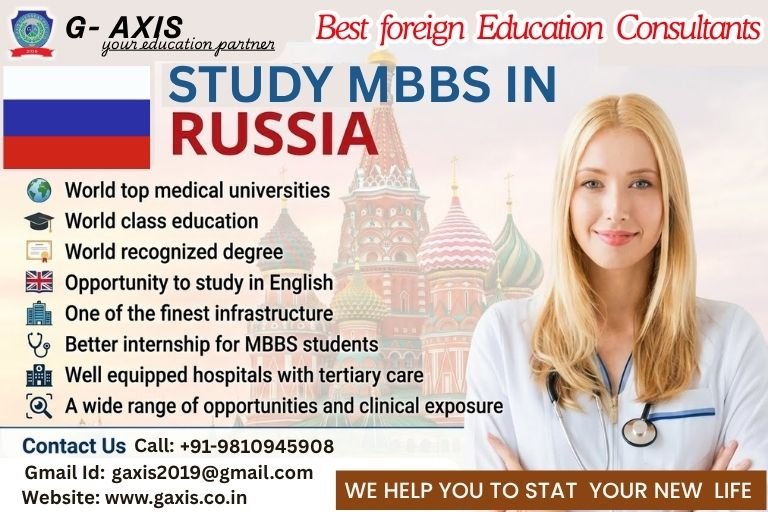
Russia is a strong, affordable choice for international studies, especially for medicine, engineering, and STEM fields, Studying MBBS in Russia is a top choice for international students, offering NMC-approved, English-medium programs at government universities with affordable tuition.
1. Official Name: Russian Federation
2. Location: Northern Eurasia, spanning Eastern Europe and Northern Asia. It borders 16 countries and is washed by 12 seas.
3. Area: Approximately 17.1 million square kilometers (about 6.6 million square miles), making it the largest country in the world.
4. Capital: Moscow
5. Currency: Russian Ruble (RUB)
6. Languages: Russian (official), along with 35 recognized regional languages and many other dialects
7. Economy: A mixed, free-market economy heavily reliant on natural resources (oil, natural gas, timber). It is considered a global energy superpower.
8. Total Population: Estimated at approximately 142–146 million in early 2026
Choosing Russia offers a unique blend of world-class education, rich cultural heritage, top 10 reasons
1. Affordable Quality Education: Russian universities provide high-quality education at low costs,
2. Internationally Recognized Degrees: Diplomas from Russian universities are widely recognized across the globe, allowing graduates to work internationally.
3. Wide Range of Study Programs: With over 766 state universities, there are many programs available, particularly in English-medium medicine, engineering, and IT.
4. Cultural and Historical Heritage: Russia offers unparalleled historical depth, featuring world-class museums like the Hermitage and historic sites like the Kremlin and Red Square.
5. Rich Cultural Life: Known for ballet, classical music, and literature, visitors can experience world-renowned performances at theaters like the Bolshoi.
6. Vast Natural Diversity: The country offers incredible landscapes, from the Arctic North and the volcanoes of Kamchatka to the deepest lake in the world, Lake Baikal.
7. Affordable Cost of Living: Beyond tuition, daily living expenses, such as transportation and accommodation in university hostels, are very economical.
8. Unique Culinary Experience: Russian food offers a rich, unique gastronomic journey, including staples like pelmeni (dumplings) and borscht.
9. Safety and Opportunity for International Students: International students can legally work while studying, and the country offers a relatively safe environment for study.
10. Unique Adventures and Experiences: Activities range from riding the Trans-Siberian Railway and visiting the coldest inhabited village (Oymyakon) to watching the Aurora Borealis.
1. Quality Education and Recognition: Russian medical degrees are recognized worldwide, including by the National Medical Commission (NMC) and WDOMS.
2. English-Medium Programs: Most universities offer comprehensive MBBS courses taught entirely in English for international students.
3. Straightforward Admissions: Admission often only requires a qualifying NEET score, removing the pressure of high-competition entrance exams.
4. Hands-on Training and Infrastructure: Universities offer advanced research laboratories and strong clinical training, often with a 1:15 maximum teacher-student ratio.
5. Global Exposure and Cultural Diversity: A large number of international students, including many from India, create a diverse, welcoming environment.
| Name of the Course | Bachelor of Medicine and Bachelor of Surgery (MBBS) |
| Duration of the Course | 6 Years |
| Basic Eligibility Criteria | Minimum 50% in 10+ 2 Examinations with BiPC Subjects |
| Requirement of NEET | Yes |
| Requirement of IELTS and TOEFL | No |
| Medium of Teaching | English |
| Popular Universities for MBBS in Russia | Irkutsk University, Kazan State Medical University, Volgograd State Medical University, etc. |
| Recognition of Medical Universities | MCI and WHO |
| Intakes | September & January |
1. Academic Qualification: Minimum 50% aggregate in Physics, Chemistry, and Biology (PCB) in 12th standard (40% for reserved categories).
2. NEET Requirement: Mandatory qualification of the NEET-UG exam.
3. Age Limit: Minimum 17 years by December 31st of the year of admission.
4. Medium of Instruction: English.
| So.No. | Key Details | |
| 1. | Sechenov First Moscow State Medical University (Moscow) | |
| 2. | Lomonosov Moscow State University (Moscow) | |
| 3. | Pirogov Russian National Research Medical University (Moscow) | |
| 4. | Kazan State Medical University (Kazan) | |
| 5. | RUDN University (Moscow) | |
| 6. | Pavlov First Saint Petersburg State Medical University (St. Petersburg) | |
| 7. | Kazan Federal University (Kazan) | |
| 8. | Saint Petersburg State University (St. Petersburg) | |
| 9. | Bashkir State Medical University (Ufa) | |
| 10. | Crimea Federal University (Simferopol) |
| So.No. | Key Details |
| 1. | Year 1: Pre-Clinical (Foundational) Subjects: Medical Biology, Genetics, General Chemistry, Physics, Histology, Anatomy, Latin Language, and Russian Language. |
| 2. | Year 2: Pre-Clinical & Basic Medicine Subjects: Human Anatomy, Histology, Cytology, Embryology, Physiology, Biochemistry, Microbiology, and Philosophy. |
| 3. | Year 3: Para-Clinical (Introduction to Clinical) Subjects: Pathological Anatomy, Pathological Physiology, Pharmacology, Immunology, Microbiology, and General Surgery. |
| 4. | Year 4: Clinical Phase Subjects: Internal Medicine, General Surgery, Obstetrics & Gynecology, Pediatrics, Ophthalmology, Otorhinolaryngology, and Dermatology. |
| 5. | Year 5: Advanced Clinical Subjects: Neurology, Infectious Diseases, Traumatology, Urology, Oncology, Psychiatry, Endocrinology, and Clinical Pharmacology. |
| 6. | Year 6: Clinical Rotations (Internship) Focus: Practical training in hospitals (Polyclinic), Pediatrics, Emergency Medicine, and Surgery. |
Key Types of MBBS Scholarships in Russia
1. Government-Based Scholarships
2. University-Based Scholarship
3. Private/Educational Grants
1. Select University: Research NMC/WHO-approved universities.
2. Submit Application: Fill out university application forms and submit academic records (10+2 mark sheet), NEET scorecard, and passport copy.
3. Receive Invitation: After clearing the university’s online entrance test/interview, receive the admission letter and subsequent invitation letter.
4. Visa Application: Apply for a student visa at the Russian embassy.
5. Travel: Reach Russia by early September for the academic year start.
1. 10th and 12th Marksheets/Passing Certificate.
2. Valid Passport (minimum 18 months validity).
3. NEET Scorecard.
4. Birth Certificate.
5. Medical Fitness Certificate & HIV test report.
6. Passport-size photographs.
The total cost of studying MBBS in Russia for a 6-year program is roughly ₹20 lakh to ₹45 lakh (INR) for international students.
| 1. | Tuition Fees: ₹2.5 Lakhs – ₹5 Lakhs (approx.). |
| 2. | Hostel Fees: ₹50,000 – ₹1,00,000 per year (varies by university). |
| 3. | Medical Insurance: ~₹8,000 – ₹15,000 per year. |
| 1. | Practice in Russia (GOZ Exam): Graduates can practice in Russian hospitals and clinics after passing the State Certification Examination (GOZ). |
| 2. | Postgraduate Specialization (PG): Students can pursue PG courses in Russia (such as Cardiology, Neurology, Pediatrics, or Surgery) or opt for international postgraduate opportunities in Europe, the Middle East, or the US. |
| 3. | Clinical Research & Academic Positions: Opportunities exist to join medical research projects or work in academic positions within universities. |
| 4. | Healthcare Management & Industry: Careers in hospital administration, health informatics, medical tourism, medical writing, or the pharmaceutical industry are viable alternatives to clinical practice. |
| So.No. | Key Information | ||
| 1. | General Physician | ||
| 2. | Medical Officer | ||
| 3. | Resident Doctor | ||
| 4. | Junior Doctor | ||
| 5. | Surgeon | ||
| 6. | Pediatrician | ||
| 7. | Gynecologist/Obstetrician | ||
| 8. | Dermatologist/Cosmetologist | ||
| 9. | Radiologist | ||
| 10. | Emergency Medicine Specialist | ||
| 11. | Psychiatrist | ||
| 12. | ENT Specialist | ||
| 13. | Medical Writer/Journalist | ||
| 14. | Medical Content Writer/Health Blogger |
Salaries after completing MBBS in Russia are generally good, particularly for specialists and those working in major cities like Moscow.
Key aspect
1. Average Earnings: Monthly earnings for doctors in Russia generally range from RUB 90,000 to RUB 1, 50,000+, depending on experience and location.
2. City-Based Variations: In major cities like Moscow and St. Petersburg, doctors can earn higher salaries (often 100,000+ RUB monthly) compared to smaller places.
3. Specialization Matters: Completing a clinical residency and specialization (e.g., cardiology, surgery) is the most effective way to increase salary, with specialists in private clinics earning 150,000 to 400,000 RUB per month.
4. Sector Differences: Private clinics and top-tier hospitals in Moscow offer much higher pay compared to public sector jobs.
5. International Opportunities: Many MBBS graduates from Russia also find lucrative opportunities in the US, UK, or the Middle East.
Contact us for more information and VISA apply.
can help – fill in your details and we’ll call you back.
Chat Now