South Korea, officially the Republic of Korea, is a highly developed East Asian nation occupying the southern half of the Korean Peninsula. South Korea is globally renowned for the “Korean Wave” (Hallyu), HYBE, JYP, YG, featuring K-pop (BTS, Blackpink, Txt, Seventeen, Twice, Stray Kids,) and K-dramas. It is a technology powerhouse known for ultra-fast internet, electronics giants like Samsung, and rapid modernization. South Korea is generally considered to have a high cost of living, particularly in Seoul, where housing, imported goods, and dining out can be expensive. South Korea is considered one of the safest countries in the world for travelers and residents, with very low rates of violent crime.
Studying in South Korea is an excellent choice, offering world-class, tech-focused education with 30+ top universities, frequently ranked in global top lists. China is the top country of origin for international students visiting South Korea for study, South Korea’s education system is globally recognized for high academic performance, producing top-tier results in science, math, and reading.
1. Official name: Republic of Korea (ROK)
2. Location: South Korea is a country located in East Asia, occupying the southern half of the Korean Peninsula, bordered by North Korea to the north and surrounded by water on three sides.
3. Area: Approximately 100,222 square kilometers (38,696 sq mi)
4. Capital: Seoul
5. Currency: South Korean won (₩, KRW)
6. Languages: Korean (official), Korean Sign Language
7. Economy: South Korea is currently the 13th to 14th largest economy in the world by nominal GDP, with an estimated GDP of roughly $1.86–$1.87 trillion. As Asia’s 4th largest economy, it is recognized as a highly developed.
8. Total population: Approximately 51.6 million (2026 estimate)
1. Stunning Blend of Old and New: Experience ancient palaces, temples, and UNESCO World Heritage Sites located alongside modern, sleek skyscrapers.
2. World-Class Safety and Security: Known for its low crime rate, South Korea is incredibly safe, allowing visitors and residents to travel and explore comfortably, even at night.
3. Unbeatable Connectivity and Tech: As a global leader in technology, the country offers high-speed 5G connectivity nearly everywhere and free public Wi-Fi.
4. Vibrant K-Culture and Entertainment: Experience the birthplace of K-Pop, K-Dramas, and movie hits like Parasite, offering a unique cultural scene.
5. Unique and Delicious Cuisine: Sample world-renowned, flavorful, and healthy Korean food, including BBQ, bibimbap, tteok-bokki, and fermented dishes.
6. Efficient Public Transportation: Korea offers one of the world’s most modern, safe, and affordable transportation systems, including subways and KTX high-speed trains.
7. Breathtaking Nature and Seasons: Experience four distinct, beautiful seasons, featuring stunning spring cherry blossoms and colorful autumn leaves, plus excellent hiking.
8. Excellent Education and Career Potential: Korean universities offer high academic standards, modern research facilities, and increasing opportunities for international students.
9. Vibrant Café and Nightlife Scene: A bustling cafe culture with unique themed shops and a lively, safe nightlife scene exist in cities like Seoul and Busan.
10. Affordability and Quality of Life: Compared to many Western nations, Korea offers a high quality of life with affordable living costs, housing, and food.
1. World-Class Education & Research: Korean universities are internationally recognized for their academic rigor, specifically in STEM fields like biotechnology, robotics, and Artificial Intelligence.
2. Affordability: Tuition fees and living costs are generally lower than in the United States, Australia, or Europe.
3. Numerous Scholarships: The Korean government and individual universities offer generous scholarships, such as the Global Korea Scholarship (GKS), to international students.
4. English-Taught Programs: While learning Korean is beneficial, many universities offer a significant portion of their curriculum in English.
5. Safe and Modern Living: South Korea is renowned for its safety, low crime rates, and modern, convenient public infrastructure.
1. Seoul National University (SNU) (Seoul): Renowned for global academic prestige and extensive exchange programs.
2. KAIST – Korea Advanced Institute of Science and Technology (Daejeon): Premier STEM institution with extensive English-taught programs.
3. Yonsei University (Seoul): Known for vibrant international campus life and UIC 100% English-taught programs.
4. Korea University (Seoul): Top-ranked for international research networks and student support.
5. Sungkyunkwan University (SKKU) (Seoul/Suwon): Strong industry partnerships and top-tier business/science programs.
6. Pohang University of Science and Technology (POSTECH) (Pohang): Specialized in science and technology research.
7. Hanyang University (Seoul/Ansan): Strong in engineering and engineering-related fields.
8. Kyung Hee University (Seoul): Strong in arts, humanities, and international studies.
9. Ulsan National Institute of Science and Technology (UNIST) (Ulsan): High research output and strong academic support for foreigners.
10. Ewha Womans University (Seoul): Leading women’s university with strong support for international students.
Seoul National University is the best university in Korea for international students, which is setting the standard of academic excellence in the country since 1946. It is part of the elite SKY universities, a 3-member league of the most prestigious universities in Korea. It has sixteen colleges offering a wide range of subjects, from humanities to medicine to engineering. Its professional graduate schools provide practical skills in fields like data science and public administration. Over 700 courses are taught in English, and it’s increasing every year. Some courses are Korean Studies, Korean Studies, International & East Asian Studies, Economics & Business, Engineering & Life Sciences, Music & Fine Arts, Korean Language, Global Practice and Field Learning.

Korea University is one of the oldest universities in Korea. It offers high-quality education in almost all study areas with its 81 academic departments. Law education, medicine, and business programs are exceptionally renowned in the institution. In recent subject rankings, KU excelled in Social Sciences & Management, Natural Sciences, and Engineering & Technology. Furthermore, KU instills humanitarian principles in all of its academic work. KU belongs to the influential SKY universities in Korea. Over 4000 international students are studying at Korea University and is continuously increasing.

Yonsei University is the oldest university and one of the most prestigious institutions in Korea. As a SKY university member, it has incredibly competitive admission rates and is known to ace world university rankings. Yonsei offers comprehensive graduate and undergraduate programs in almost every discipline. Medicine, Dentistry, Pharmacy, Nursing, Music, MBA, Law School, Some courses offered.
The Korean Advanced Institute of Science and Technology is the leader in innovations, entrepreneurship, and science & technology in Korea. Established in 1971 by the Korean government, it is the first public research-oriented institution for science and engineering. Interesting and advanced areas like Entertainment Engineering and Eco-Energy are among the focus of its research units.
Some courses are
Aerospace Engineering, Bio and Brain Engineering, Business and Technology Management, Chemical and Biomolecular Engineering, Civil and Environmental Engineering, Computer Science and Engineering (see pre-approved courses), Electrical Engineering, Industrial Systems Engineering, Industrial Design, Materials Science and Engineering, Mathematics, Mechanical Engineering, Nuclear and Quantum Engineering, Physics.
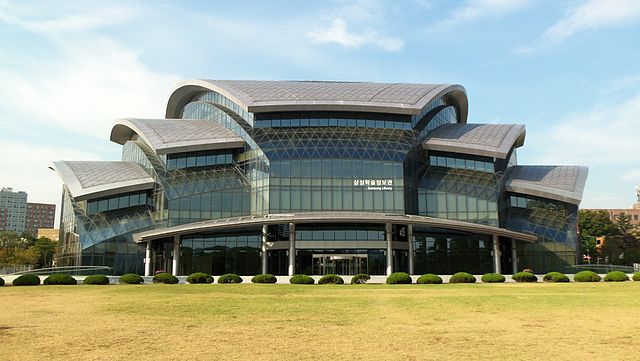
Sungkyunkwan University is one of the best private universities in Korea that traces its roots from Sungkyunkwan, the Joseon dynasty’s primary academic institution. The university remains in its historic site but is presently a leading force in business and technology. The research units of SKKU are sponsored by Hyundai, Samsung, and many government agencies, creating research outputs relevant to industries and society. Some courses are College of Confucian Studies and Eastern Philosophy, College of Liberal Arts, College of Law, College of Social Sciences, College of Economics., School of Business., College of Education., School of Art.
South Korea is home to many internationally acclaimed higher education institutions and attracts scores of international students from around the world. Here are the top universities to study in South Korea.
| So.No. | Structure of the Education System |
| 1. | Compulsory Education (9 years): Elementary school (ages 7-12) and middle school (ages 13-15) are compulsory and mostly free. |
| 2. | High School (3 years): While not compulsory, over 90% of students attend. Types include general academic, vocational, and specialized high schools (e.g., science, arts). |
| 3. | Higher Education: Includes four-year universities and two-year junior colleges, often highly selective. |
| 4. | School Year: The academic year starts in March, consisting of two semesters, with a summer break in July-August and a winter break from mid-December to February. |
| So.No. | Key Characteristics |
| 1. | High-Stakes Examination (CSAT): The College Scholastic Ability Test (CSAT), or Suneung, is held annually in November. This single exam heavily influences university admissions, employment prospects, and social status. |
| 2. | Hagwons (Private Tutoring): Due to intense competition, many students attend hagwons—private academies—after school hours to get extra tutoring, which creates a significant financial burden on households. |
| 3. | Teacher Prestige: Teachers are highly respected, well-paid, and considered a prestigious profession. Teachers in public schools often rotate schools every 5 years to ensure equality. |
1. Engineering & Technology: As a global technology leader, programs in Artificial Intelligence, Data Science, Cybersecurity, Robotics, and Computer Science are premier choices, heavily funded and industry-linked, particularly at KAIST and Hanyang University.
2. Business & Management: Popular programs include International Business, Finance, and Marketing at top schools like Yonsei and Korea University, offering strong ties to global corporations, according to.
3. Media and Communication/Film: Supported by the “Hallyu” (Korean Wave), programs in Film, Media Studies, and Digital Communications are prestigious.
4. Korean Language and Cultural Studies: Programs at universities like Hankuk University of Foreign Studies provide deep insights into Korean culture and language.
5. Fashion Design and Beauty: South Korea is a global hub for beauty and fashion, making these programs excellent for creative careers.
6. Biotechnology & Life Sciences: Advanced studies in biomedical engineering and biotechnology are robust, especially at leading research universities.
Structure of the Education System
1. Compulsory Education (9 years): Elementary school (ages 7-12) and middle school (ages 13-15) are compulsory and mostly free.
2. High School (3 years): While not compulsory, over 90% of students attend. Types include general academic, vocational, and specialized high schools (e.g., science, arts).
3. Higher Education: Includes four-year universities and two-year junior colleges, often highly selective.
4. School Year: The academic year starts in March, consisting of two semesters, with a summer break in July-August and a winter break from mid-December to February.
Key Characteristics
1. High-Stakes Examination (CSAT): The College Scholastic Ability Test (CSAT), or Suneung, is held annually in November. This single exam heavily influences university admissions, employment prospects, and social status.
2. Hagwons (Private Tutoring): Due to intense competition, many students attend hagwons—private academies—after school hours to get extra tutoring, which creates a significant financial burden on households.
3. Teacher Prestige: Teachers are highly respected, well-paid, and considered a prestigious profession. Teachers in public schools often rotate schools every 5 years to ensure equality.
When to Apply (Deadlines)
1. Spring Semester (March start): Applications usually open in September/October of the previous year.
2. Fall Semester (September start): Applications usually open in March/April of the same year.
How to Apply (Steps)
1. Choose a Program & University: Identify your university and check specific entry requirements on their official websites.
2. Prepare Documentation: Gather academic transcripts (Apostilled/verified), Statement of Purpose (SOP), recommendation letters, and a valid passport.
3. Language Proficiency: Submit TOPIK scores (Level 3+) for Korean-taught programs or IELTS/TOEFL (5.5 – 6.5+) for English-taught programs.
4. Submit Application: Apply through the university’s online portal.
5. Apply for Scholarships: Look for the Global Korea Scholarship (GKS) or university-specific funding.
6. Secure Visa: Upon acceptance, obtain a D-2 Student Visa from the Korean Embassy/Consulate with your certificate of admission.
Key Eligibility & Requirements:
Academic Requirements:
1. Undergraduate: Completion of 12 years of education (high school diploma).
2. Postgraduate: A bachelor’s degree for Master’s programs, and a Master’s for Doctoral programs.
Language Proficiency:
1. Korean Taught Programs: Typically TOPIK Level 3 or higher.
2. English Taught Programs: IELTS (6.0+), TOEFL (80+), or proof of English as a medium of instruction.
Application Documents:
1. Completed application form.
2. Academic transcripts and certificates.
3. Statement of Purpose (SOP) or Study Plan.
4. Letters of recommendation.
5. Passport copy.
6. Financial proof (bank statement showing sufficient funds).
| So.No. | Details |
| 1. | Global Korea Scholarship (GKS): The premier government-funded program covering full tuition, airfare, monthly allowance ($1,310,000 KRW), medical insurance, and language training. |
| 2. | University Scholarships (SKY Schools): Seoul National University, Korea University, and Yonsei University offer merit-based scholarships that often waive tuition or provide living stipends. |
| 3. | KAIST & POSTECH Scholarships: Specialized, fully funded scholarships for STEM international students. |
Core Requirements for Part-Time Work
1. Permitted Visa Types: Primarily D-2 (degree seeking) and D-4 (language trainees).
2. Permit Requirement: Students must secure approval from the Immigration Office/Office of International Affairs (OIA) before starting work. Working without permission is illegal.
3. Time Constraints (D-4): Language trainees usually must wait 6 months before working.
4. Academic Standing: Must maintain over 90% attendance, a GPA above 2.0, and good academic standing.
5. Language Proficiency: A TOPIK level of at least 2 is generally required, with higher levels (3+) permitting more hours.
Popular Part-Time Job Sectors
1. Café/Restaurants/Convenience Stores: Most common, requiring basic Korean, flexible hours.
2. University Assistant/Library: Convenient on-campus jobs.
3. Teaching English/Tutoring: High-paying alternative, particularly for native speakers.
4. Translation/Interpretation: Potential for skilled students.
1. Technology & Engineering: High demand for AI specialists, software developers, semiconductor engineers, and data analysts.
2. Education: Constant demand for English teachers in private academies (Hagwons) and public schools.
3. Healthcare & Life Sciences: Increasing need for nurses and caregivers, particularly with an aging population.
4. Finance & Sales: Opportunities for accounting, marketing, and international business specialists.
5. Manufacturing: Skilled roles in electronics and automotive sectors.
1. Samsung Electronics: The largest conglomerate in South Korea and top employer.
2. Hyundai Motor Company: A major automotive employer often conducting large-scale recruitment drives.
3. SK Hynix: A major player in the semiconductor industry and top-tier employer.
4. LG Electronics: Known for massive recruitment efforts in the technology sector.
5. Naver Corporation: Korea’s leading search portal and a major tech recruiter.
6. POSCO: One of the world’s largest steelmakers, listed as a top 10 company.
7. Robert Walters Korea: A global recruitment leader specializing in mid-to-senior level professionals.
8. Adecco Korea: A major agency known for high-volume recruitment in logistics, operations, and permanent staffing.
9. JAC Recruitment Korea: A prominent firm specializing in placing professionals in both local and multinational companies.
10. JobKorea: While primarily a job portal, it is the leading recruitment marketplace with the highest monthly active users in the country.
| 1. Public Universities: Roughly KRW 4,000,000 per semester (~USD 3,000). | |
| 2. Private Universities: Often higher, around KRW 6,500,000+ per semester (~USD 4,500+). | |
| 3. Location: Universities in Seoul generally have higher tuition and living costs compared to other cities like Busan or Daegu. | |
| 4. Language: Courses taught in Korean may have different fee structures than English-taught international programs. |
| 1. Scholarships: Many universities offer merit-based scholarships that can significantly reduce costs. | |
| Living Costs: Accommodation, food, and transportation average roughly USD 900–1400 per month. | |
1. Safety and Environment: South Korea, particularly Seoul, is incredibly safe, with very low crime rates. It is known for being organized and clean.
2. Affordable Quality: Compared to Western countries, the cost of living is manageable, especially with the wide availability of academic, government, and 60% TOPIK-based scholarships.
3. Convenience and Technology: Students enjoy fast, efficient public transportation and nearly ubiquitous high-speed internet.
4. Cultural Experience: It is a dream destination for K-pop and K-drama fans, featuring unique experiences like themed cafes, karaoke (noraebang), and intense, fun nightlife.
5. Academic Intensity: Universities are highly competitive and academically demanding, often with a strict, hierarchical structure.
Please contact us for more guideline and VISA apply