


Brazil is the largest country in South America and the fifth largest nation in the world. It forms an enormous triangle on the eastern side of the continent with a 7,400km coastline along the Atlantic Ocean. It has borders with every South American country except Chile and Ecuador. Brazil is a lively, vibrant place, filled with culture, food, drink and adventure. In fact, it’s the fifth-largest in the world.
OFFICIAL NAME: Federal Republic of Brazil
CAPITAL: Brasilia
OFFICIAL LANGUAGE: Portuguese
MONEY: Real
Why Study in Brazil?
Brazil has been actively pursuing internationalization as part of the country’s focus on enhancing its academic reputation and foreign student numbers are consequentially skyrocketing. Its easier than ever to apply to study in Brazil, and with over 2,000 private and public schools offering quality higher education programs, there are opportunities galore for international students.

Brazil’s largest university is also its most prestigious. The university features among the world’s best in 42 out of a possible 46 subject areas, including several top-50 positions. The USP welcomes students from all continents, as well, with its International Office that efficiently handles global academic network activities, such as Erasmus Mundus and SMILE (Student Mobility in Latin America, Caribbean, and Europe.)
Some Courses offered
. Administration. Curriculum. Administration – São Paulo – day-time. …
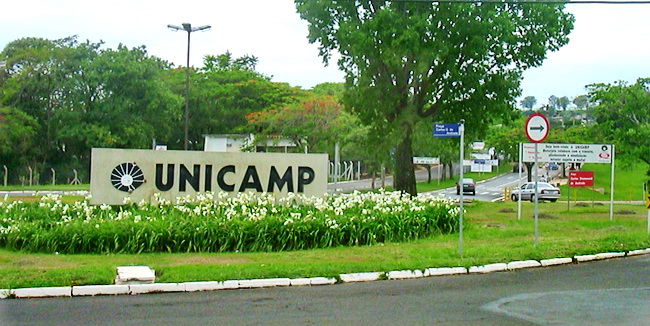
Founded in 1966, Universidade Estadual de Campinas (Unicamp) is considered a ‘younger’ university but also one of the world’s most prestigious. It currently ranks 2nd in Latin America and joint 182nd in the world.
Some Courses offered
1.Master Child and 2.Adolescent Health.
3.Master Collective Health.
4.Master Gerontology.
5.Master Medical 6.Pathophysiology.
7.Master Medical Sciences.
8.Master Nursing.
9.Master Pharmacology.
10.Master Surgery…. etc.

Founded in 1792, Universidade Federal do Rio de Janeiro (UFRJ) is Brazil’s oldest university. It currently ranks 7th in Latin America and 311th in the QS World University Rankings. Universidade Federal Do Rio De Janeiro (UFRJ) has 157 undergraduate and 580 graduate programs to accommodate its 56,000 students and 9,300 staff members. It also has seven museums, including the National Museum of Brazil in which many of UFRJ’s researchers, offices and laboratories are housed. The National Museum offers graduate courses in subjects such as anthropology, sociology, botany, geology, paleontology and zoology. Along with these subjects, the Universidade Federal do Rio de Janeiro offers courses in health sciences, technology, natural and mathematical sciences, legal and economic studies, philosophy and humanities and languages and arts.

Established in 1978, the Universidade Estadual Paulista (UNESP) is ranked 10th in Latin America and in the 491-500 range of the QS World University Rankings for this year. Also known as São Paulo State University, the Universidade Estadual Paulista “Júlio de Mesquita Filho” (UNESP) is a public, multi-campus university that accommodates a combined student body of almost 50,000 across its 23 campuses. UNESP has 33 faculties or institutes, 30 libraries, two hospitals, three animal hospitals and even five farms. It also has several complementary units including the Institute for Theoretical Physics (Instituto de Física Teórica). UNESP offers courses in a wide variety of subjects in the sciences, engineering and technology, humanities, social sciences and arts.
FACULTY OF APPLIED SCIENCE & ENGINEERING
1.Chemical Engineering
2.Civil Engineering
3.Computer Engineering
4.Electrical Engineering
5.Industrial Engineering
6.Materials Engineering
7.Mechanical Engineering
8.Mineral Engineering
9.Engineering Science… etc
Foreign students in Brazil can pursue any topic or field of study they choose. Brazilian institutions provide a wide range of degrees in terms of education, technical expertise, and professional abilities. Here are the top courses to pursue in Brazil.
International students who aspire to study in Brazil must meet certain eligibility criteria which can differ as per your chosen program and university. Here are some of the basic prerequisites that you need to keep in mind before beginning your application process for a university in Brazil.
Scholarships are available for Indian students looking to study abroad anywhere, like Inlaks Scholarships, as well as subject-specific scholarships for specific streams or disciplines, for example, Saryu Doshi Post Graduate Fellowships in Liberal Arts & Sciences.
Most state colleges in Brazil will only charge students a registration since state schools in Brazil are inexpensive for both domestic and international students. Private higher learning schools will pay students up to the postgraduate level, which may vary depending on the graduate program you select and the school itself. Private tuition prices can range from R$7,800 to R$40,200 (£1,600 to £8,200).
There are very few colleges in Brazil that provide student housing, although many will assist in arranging homestays. Otherwise, students can remain in privately rented housing.
A month’s rent for an apartment might be between R$830 and R$1,200 (INR 11,785 and INR 17,000). Utilities (which include water, electricity, and gas) may cost around R$290 (INR 4,000).