One of the most popular travel destinations in Europe, the beautiful country of Italy is also a favorite study destination for many international students. The mountains of Dolimite and Apennine, the Italian Rivera, the famous Colosseum; Italy offers its unfathomable beauty, heritage and architecture to be marveled. A visit to the St. Peter’s Basilica in the Vatican and the Sistine Chapel may get one a glimpse of the Pope. The beautiful water city of Venice guarantees its visitors a view that is sure to remain fossiled in their memories for times to come.
If you are opting to study in Europe, Italy should be your first preference. The quality of education, highly ranked universities, weather conditions, fresh farm food, vibrant and friendly people, exciting night, and passion for soccer is something that will provide you life time experience.
Why study in Italy?
1. Highly Ranked Universities
The country is the best choice for students to pursue education not just because of beautiful landscapes, but Italy has got some of the top private and public universities. According to the Guinness Book of Records, the University of Bologna is one of the oldest universities in Europe. The university is operating without any interruption since 1088. There are many world-known universities in Italy, which provide high-quality education to national and international students. Italy is well-known for being Europe’s education powerhouse, with an outstanding 41 universities listed in the QS World University Rankings 2022. Here are some of the top reasons for international students to study in Italy.
2. Affordable Country for Students
Italy provides high quality of life, but at the same time, it is affordable for international students, compared with other countries of Europe. International students can easily afford the tuition fee, accommodation charges, cost of living, and other expenses. Usually, it depends on which part of Italy you are studying, as there are some cities like Rome, Milan, Bologna, etc., which are expensive. The Italian universities also offer scholarships to their international students; you can get more information from the university website.
3. Many Courses and Study Programs are Taught in English
One of the significant hurdles in studying abroad is language. If you are good at the Italian language, there won’t be an issue, but the country has designed various courses and study programs in the Italian language to attract international students. Few cities like Rome, Siena, and Florence are famous for extensively offering English language courses. There are also various courses which are taught in both English and Italian.
4. Plenty of Higher education Options
Italy offers various courses in almost every field to pursue higher education. However, the country is known for its courses in arts, architecture, fashion, history, design, and culture. In recent years Italy has emerged as one of the best destinations to do research work and offer every needed facility to international students. Italy has also included various modern courses in its higher studies, and one should not forget some of the greatest thinkers belongs to the country.
5. Well Planned Transportation Around the Country
The country has a well-organized transportation system, making it easier for the students to commute from one city to another and even within the city. The transportation facilities like – bus, train, cab, or trams are affordable. Besides that, the country is well connected with European and Non-European countries through all the major cities of the country. The country is equipped with around eighty-seven airports and seventy-seven railway stations.
6. Food and Beverages
Everyone knows Italy is famous for its authentic and delicious Pizzas, but you can get a huge variety of amazing cuisines, food, and beverages throughout the country at a reasonable price. Most of the Italian restaurant’s menus are dominated by fresh and seasonal produce. Italy is also famous for its world-class wine.
7. Italian Seven: Okay, the reason behind writing “Italian seven” is the language. Out of the 7 most studied languages in the world, it ranks at the 4th position. Most of the international students have a strong desire to learn Italian to immerse themselves in the funny, musical, and romantic culture of the nation. You can do so here as the universities provide an opportunity for students to learn the language.
8. Standard of Living: Italy has been a cradle of the Roman civilization and has managed to restore and maintain most of its historical monuments. UNESCO recognizes most of its cultural sites. Italy also dominates 50% of the art industry in the world. Italians share their core values of family, generosity, honesty and take pride in their culture. The Italian government can be credited for its good healthcare system and low crime rate in the nation. CIA World Factbook 2015 statistics have shown that Italian people are expected to live till the age of 82.
9. The Picture Perfect Natural Beauty
It isn’t easy to decide which is the most beautiful city in Italy. The whole country is full of beautiful cities, locations, and sites. Every city has its own history and culture. The country also offers exciting nightlife. The Italian cities never sleep, and international students may have the opportunity to enjoy the magical vibes of nightlife.
10. Hospitality
Italy is known to welcome tourists and international students. That makes a friendly atmosphere for students not only in campus but outside of it as well. Sometimes it becomes tough for international students to mix with the locals, but you don’t need to worry about it in Italy. The friendly nature of Italians will make you comfortable, and more importantly, you won’t have homesickness.
Quality of Education
Italian Universities are among the oldest in the world. The country has given to the world – leading scientist, revolutionaries, artist, and many Noble Prize laureates. Italian universities are acclaimed around the globe and stand as epitomes in fields of culture, Architecture, Applied Sciences, Art, Medicine, Engineering, Industrial Designs, and Economics.
The quality of education offered through all institutions of Italy is unmatched. The combination of superior teaching and the openness of the country to welcome international students, have made many overseas students turn to Italy in dreams of crafting successful educational and career paths.
An Indian student studying in Italy can achieve great heights with the quality of degrees they graduate with. Degrees earned through the educational institutions of Italy are recognized through Europe and across the globe. Universities counsel students during the length of their courses.
Top Universities in Italy
The QS World Ranking for Top Universities features 30 Italian universities, and 12 of these universities feature in the top 500.
1. Sapienza University of Rome
Generally, known as “Sapienza”, Sapienza University of Rome is one of the largest European and excellent collegiate research universities in Italy. The university was established in 1303. The University is home to students hailing from different parts of the world. They leave no stone unturned in providing world-class education. The University boasts of its modernity, recognized and qualified faculty and intellectually conducive environment.
2. SDA Bocconi
When considering to study in Italy, you can’t miss out SDA Bocconi. “Scuola di Direzione Aziendale” or the School of Management is one of the most distinguished business schools in Italy. It is also recognized by international associations like AACSB, AMBA, EQUIS and CSQNet. At present, the university is well established and provides long-lasting creativity, knowledge, and skills to its students. Very few universities in Italy provide job security to its students and Bocconi is one of them. Students who have entrepreneurial dreams should aim for this university. Read our detailed blog to know all about Bocconi University, its offered programs and entry requirements.
3. University of Milan
One of the largest universities in Italy, it has around 60,000 students. It is a public research university with around eight faculties, two schools, and 2000 professors. The university is famous for its scientific productivity, art, and culture. The University is located in buildings with modern infrastructure known as “the City of Studies”. This university provides a comprehensive learning experience to its students and is the only one in the city of Milan, which is also known as the Fashion Capital of the world. Majority of students here are either from Asia or Latin America and they feel right at home here.
4. University of Bologna
It’s recognized as the oldest university on the planet. They say it was the first university which coined the term “Universitas” to define an institution. Buildings of the university are modern and well designed. A majority of professors here have an outstanding career within their own fields. You will be taught by one of the most passionate teachers of the world here who can speak English fluently. The interactions with teachers, peers and most members of this university are not only friendly but also abundant in knowledge.
5. University of Turin
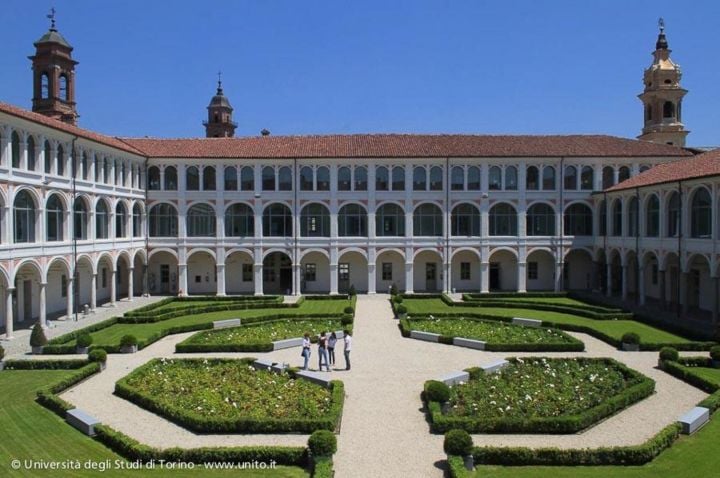
Another option to consider to study in Italy is the University of Turin, this is one of the highest-ranking universities in Italy as well as in Europe. Generally, locals call it UNITO. The university was established 615 years ago and is one of the oldest Italian universities. At present, it provides more than 140 undergraduate and postgraduate programs in various fields. Most of the courses taught here are in English. The city has a lifestyle rich in culture and organizes the Biggest Bookfair of Italy, every May.
Popular Courses in Italy
MBA
International Relations
MBBS
Fashion Design
Engineering
Architecture
Fine Arts
Humanities
Business and Commerce
Popular Specialisation
Bachelor in Fashion Art Direction
BA in Performing Arts
Bachelor’s Degree in Digital Management
Bachelor’s Degree in Linguistic and Cultural Mediation
Bachelor in Business Studies
Bachelor in International Politics and Government
Bachelor of Arts in Sports Management
Bachelor of Arts in Tourism Management
Master in Automobile Design
Master in Transportation and Car Design
Masters in Economics
Masters in Area & Cultural Studies
Masters in Architecture
Masters in International Relations
Masters in Fashion Design
Masters in Business Administration
Institutes for Higher Artistic Education
These include a wide range of courses in artistic fields and institution are divided into:
Higher Schools of Design
Higher Institutes for Musical Studies
State Music Conservatories
National Academy of Drama
National Dance Academy
Academies of Fine Arts
Higher Technical Institutes
These are strongly practice-oriented programs providing both theoretical and practical background to prepare students for real-world requirements. At least 50% of the teaching faculty come from companies to share their expertise with students. The courses cover areas of energy efficiency, sustainable mobility, new technologies, communication & information technology and innovative technologies for cultural activities and tourism. Upon completion of 2 to 3 years, of course, students are awarded a Diploma of Higher Education.
Language Proficiency
Your study in Italy is paced with learning another language “Italian”, which is the national language of the country. Having fluency in multiple languages definitely looks great on your CV. Besides, if you plan to take up a course in Italian, you will have to take CILS or CELI. But if you choose to study in English, then you need to first give an English Proficiency test like IELTS or TOEFL.
Popular Intakes
There are two popular intakes in Italy- September and February. September Intake is the most popular intake as most international students apply during this period and universities offer maximum programmes to students. February is the second popular intake in Italy as the number of courses and students applying are relatively less and the competition is less fierce. Here is the timeline for the two intakes in Italy-
Intakes
Application Begins
Classes Start
Primary Intake
April to June
September
Secondary Intake
September to October
February
Study in Italy English
Most of you will be surprised by this, since there is a widespread notion that one cannot pursue higher education in Italy if they do not speak the language. This is completely false! Yes, there was a time when one needed to learn italian language to be able to study in Italy, but today, the colleges and universities conduct their classes, programs and courses in English. This implies that international students, regardless of their level of Italian, can now study at any of Italy’s institutions.
A refined research venture
Italy has a long history of producing many scientists and researchers. It boasts one of the best research and development infrastructures. It spends a significant amount of money each year to guarantee that the quality of research conducted in its laboratories stays among the best in the world. It is because of this passion and drive that Italy has won the Nobel Prize several times. Italy is particularly well-known for its car sector research and development efforts and contributions.
A world-class monetary power
Italy has a highly developed capitalist mixed economy, which is Europe’s third biggest and the world’s ninth largest. It is one of the world’s most industrialised countries, as well as a leader in trade and export. It is the world’s sixth-largest manufacturer. The car sector employs around 1,44,000 people and contributes 8.5 percent of the Italian GDP. Top vehicle brands such as Fiat, Ferrari, Lamborghini, Maserati, and others may be found in Italy. Italy is, unsurprisingly, placed eighth on the world’s highest quality of life index.
Academic Stature
The country invests a significant amount of money each year in research and development, which is why it has typically produced Nobel laureates and is one of the top automotive manufacturers. Free education is an effort that has significantly improved the academic level of the country. Furthermore, schooling is compulsory until the age of sixteen. Even in the face of severe global competition, the country’s world-class infrastructure and unwavering commitment to promote the greatest talent, whether domestic or international, guarantees that it retains its high academic quality.
Education System in Italy
Italy, like many other nations, has a three-tiered educational system. You are protected whether you have recently completed your education or are a graduate student. When it comes to education, Italy has always maintained parallel international norms. More information about the Italian educational system may be found here: Italy’s Educational System.
Student Life in Italy
Because a big number of students come to Italy to seek higher education every year, an international student never feels isolated or alone. Studying in Italy provides the opportunity to meet new individuals from other nations and form friendships. This broadens one’s perspective and prepares one for a great future everywhere on the planet. Aside from educational facilities, sports and other co-curricular and extracurricular activities are available. Plus, education in Italy is less expensive than in most other European countries! In general, student life in Italy is an unforgettable experience.
Study in Italy for Free with these Scholarships
Italy is a great option for pursuing higher education, from Engineering to MBA to Natural Science, students can pursue a number of specialisations and build a strong career in the country. Various universities offer international students financial assistance in the form of scholarships, bursaries and grants to ease the burden of international cost of attendance. Here are some scholarships to study in Italy for free!
Scuola Normale Superiore PhD Scholarships
Bologna University Study Grants for International Students
Bocconi Merit and International Awards
Politecnico di Milano Merit-Based Scholarships for International Students
Italian Government Scholarship Program for Foreign Students
Padua International Excellence Scholarship Programme
EDISU Piemonte Scholarships
Università Cattolica International Scholarships
Politecnico di Torino International Scholarships
Study in Italy in English
Italy offers a number of programmes in two languages- Italian and English. Top universities in the country offer over 500+ English taught programmes at every entry-level. From Architecture to fashion studies and MBA, students can find quality subjects in English as the medium of instruction at universities like the University of Bologna, University of Florence, University of Milan and many more.
Study in Italy without IELTS
Studying in Italy is not just fun but also extremely easy! Italian Universities allow international students to study in the country without the hassle of giving entrance exams like IELTS or TOEFL. Though IELTS is the most common proof of English proficiency, many universities accept the following alternatives-
International students who have completed their previous degrees in English language and can provide a Medium of Instruction Certificate are eligible to study in Italy without taking the IELTS test.
Students applying after 12th can submit proof of studying English from classes 8 to 12 in order to be eligible for the IELTS waiver.
The Italian authorities make exceptions for students applying without IELTS by conducting interviews.
Top Universities in Italy Without IELTS
University of Bologna
University of Milan
University of Florence
University of Pisa
University of Padua
University of Naples Federico II
University of Trento
John Cabot University
Sapienza University of Rome
University of Verona
Career Outlook
Student graduates from Universities of Italy enjoy favourable employment both in Europe and around the globe. 16 Italian Universities are ranked in the top 300 of the QS Ranking for Employability; credited to the active participation of The State in maintaining the quality of education.
Graduates from the field of Medicine have the highest employability, followed by Engineering – the IT industry has the highest number of jobs. Economics, biology, pharmaceutical chemistry, are other sciences that appear attractive in the Italian employment market.
Working while studying in Italy
An Indian student by Italian law is permitted to work 20 hours a week provided they have a work permit. A work permit is issued to students after producing a job offer from an Italian employer. Italian companies may hire students as interns. Students are paid 500 to 1000 EUR. A course of less than 3 months duration does not deem a student eligible to work while studying.
Tuition Fees and Cost of Living
Your study in Italy is generally more affordable than in other parts of the Western EU or North America. The country is known for excellent quality education at publicly financed universities. The regular tuition fee for international students depends on your family income and the program you are applying for, from €900 to €4,000 per year at a public university, while it may be somewhere around €6,000 to €20,000 per year in private institutions.
Student housing in bigger cities in Italy can be somewhere between €300 to €600 per month. In most of the EU countries, the cost of living highly depends on where you choose to study. So, on average, the living cost will be roughly around €12,000 per year to cover accommodation, food, transport, entertainment and other expenses.
Visa Application
An Indian student stands entitled to a C-Visa or a D- Visa.
Short-stay Visa or C-Visa – Available to students pursuing short courses generally courses that run for less than 90 days
Long-stay Visa or D-Visa – Available to students pursuing degree courses that are of minimum duration of 20 hours a week or 80 hours per month, and lasting for more than 90 days.
Please contact us for more information and VISA apply.
Interested in studying abroad?
can help – fill in your details and we’ll call you back.