

New Zealand is a sovereign island nation situated in the southwestern Pacific Ocean, comprising primarily the North Island and the South Island; its largest city is Auckland, and its capital is Wellington. New Zealand is renowned worldwide for its spectacular and diverse landscapes—ranging from fjords and glaciers to volcanoes—and is also distinguished by its indigenous Māori culture and its popular nickname, “Kiwi.” New Zealand is consistently ranked as one of the safest countries in the world, characterized by very low rates of violent crime, a high degree of political stability, and the absence of any dangerous native wildlife.
New Zealand is considered an expensive country, where costs are significantly elevated due to housing, food, and the expenses associated with imports necessitated by its remote geographical location. Studying in New Zealand is generally regarded as an exceptional experience, offering high-quality education, a safe environment, and opportunities for practical learning—particularly in STEM and vocational fields. All eight of the country’s universities rank among the top 3% of universities globally. New Zealand serves as a major hub for international students, attracting large numbers of learners from Japan, India, Australia, as well as various countries across South America and Europe.
1. Official name: New Zealand (English) and Aotearoa (Māori).
2. Location: An island country in the southwestern Pacific Ocean, situated approximately 1,600 km Southeast of Australia.
3. Area: Approximately 268,021 square kilometres.
4. Capital: Wellington, the southernmost capital city in the world.
5. Currency: New Zealand dollar (NZD).
6. Languages: There are three official languages: English, Māori (te reo Māori), and New Zealand Sign Language.
7. Economy: A developed, industrialized economy primarily driven by agriculture (especially dairy), tourism, and technology.
8. Total population: Estimated at approximately 5,345,980.
1. World-Class Education: All eight universities are globally recognized, offering high-quality, research-driven education.
2. Practical Learning Style: The curriculum focuses on innovation, problem-solving, and practical skills rather than just theory.
3. Work Opportunities for Students: International students can work up to 20 hours per week during term time and full-time during breaks.
4. Post-Study Work Visas: Students can qualify for a 3-year post-study work visa, making it easy to gain work experience.
5. Safe and Stable Country: Consistently ranked among the world’s safest, most peaceful, and least corrupt nations.
6. Welcoming and Diverse Culture: Known for its friendly, down-to-earth locals (Kiwis) and a supportive, multicultural society.
7. Unbeatable Natural Environment: Known for spectacular scenery, including mountains, beaches, and forests.
8. High Quality of Life: Offers a relaxed, work-life balance, particularly in city hubs like Auckland.
9. Accessible Education Costs: Generally more affordable tuition and living costs than the US or UK.
10. Globally Recognized Qualifications: Degrees earned are respected globally, setting you up for international career opportunities.
1. World-Class Education: All eight New Zealand universities are ranked high in the QS World University Rankings. The country boasts a robust, British-based education system, with strong quality assurance.
2. Post-Study Work & Migration: Students often get up to three-year open work visas for Bachelor’s or postgraduate degrees, facilitating pathways to residency.
3. Affordability: Tuition fees and living expenses are generally lower than in the US, UK, and Australia.
4. Safety and Lifestyle: Consistently ranked as one of the world’s most peaceful and safe countries. It offers a stunning natural environment perfect for outdoor activities like hiking and skiing.
5. Practical & Student-Focused: The curriculum is practical and industry-endorsed, with high student satisfaction rates.
1. High-Quality Education
2. Post-Study Work Opportunities
3. Safe and Peaceful Environment
4. Work While Studying
5. English-Speaking Country
6. Strong Focus on Practical Learning
7. Beautiful Natural Environment
8. Multicultural Society
9. Research Opportunities
10. Potential Immigration Pathways
1. University of Auckland: The largest and top-ranked institution (QS #1 in NZ), known for high research output, business, engineering, and arts.
2. University of Otago: New Zealand’s oldest university, located in Dunedin, recognized for health sciences, medical research, and a strong campus lifestyle.
3. University of Canterbury: Located in Christchurch, renowned for engineering, science, and forestry.
4. Victoria University of Wellington: Located in the capital, it excels in law, humanities, social sciences, and creative arts.
5. Massey University: Known for its expertise in veterinary science, agriculture, aviation, and applied research across campuses in Palmerston North, Wellington, and Auckland.
6. University of Waikato: Located in Hamilton and Tauranga, known for management (triple-crown accreditation), computer science, and education.
7. Lincoln University: Specialist university near Christchurch focused on land-based education, agriculture, and environmental management.
8. Auckland University of Technology (AUT): Known for modern, innovative programs in technology, communications, and design.
Key Components of the New Zealand Education System
1. Early Childhood Education (ECE) (Ages 0–5): Non-compulsory but highly encouraged; focuses on play-based learning and social interaction.
2. Primary & Secondary Schooling (Years 1–13):
3. Tertiary Education: Includes universities, polytechnics, and Private Training Establishments (PTEs), providing vocational and academic pathways.
When to Apply (Intakes & Deadlines)
New Zealand has two main academic intakes:
1. Semester 1 (Feb/March): The main intake. Apply between October and November of the previous year.
2. Semester 2 (July): Second intake. Apply between March and April of the same year.
How to Apply: Step-by-Step
1. Select Course & Institution: Research institutions (e.g., University of Auckland, University of Otago) that offer your desired program.
2. Apply to Institution: Submit applications with required documents (academic transcripts, CV, SOP) to get an “Offer of Place”.
3. Secure Funding: Ensure you have enough funds to cover tuition fees and at least $NZD 20,000 annually for living expenses.
4. Accept Offer & Pay Fees: Once accepted, pay the tuition fee for the first year (or as per offer letter) to get a confirmation of enrollment.
5. Apply for Student Visa: Apply online via Immigration New Zealand (cost approx. $NZD 295). You will need a medical certificate, police clearance, and a passport valid for your stay.
6. Arrange Insurance & Accommodation: Medical and travel insurance is mandatory for the entire stay.
If you’d like to work here after gaining your qualification to get some experience, you need to know about our requirements to work after study. It’s good to have these in mind when deciding what course to enroll in so you gain a qualification that’s needed and valued by New Zealand employers.
Top 5 Universities in New Zealand
1. University of Auckland
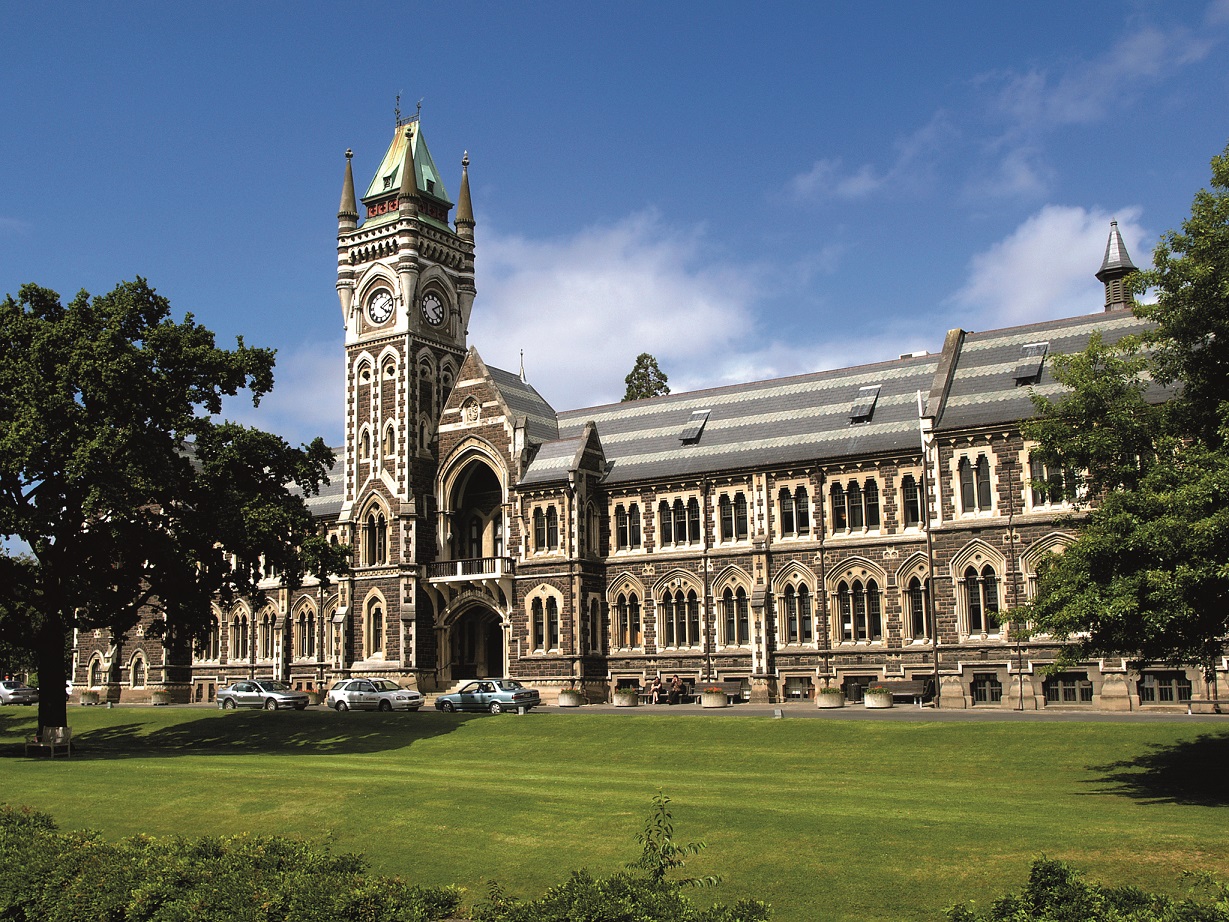
Formally opened in 1883, The University of Auckland is regarded to be the top-tier University of New Zealand in terms of employability of graduates. In the late 1960s, the university created the largest library in New Zealand. The University of Auckland has more than 40,000 students enrolled in its five campuses, close to 10,000 students graduate on a yearly basis. Popular courses offered in Bioengineering, Health Sciences, Education & Social Work, Law, Engineering, Creative arts and so on.
2. AUT University

Established in 2000, Auckland University of Technology (AUT) is a publically-owned institution for higher education and research. Founded as Auckland Technical School in 1895, the institution rendered evening classes to students. The institution began offering daytime classes and changed the name to Auckland Technical College. Teaching is resourceful, responsive and interactive, characterized by modern approaches, resources and technologies. Popular courses offered in Art & Design, Business & Economics, Colab- Creative Technologies, Communication Studies, Education, Engineering, Computer & Mathematical Sciences, Health Sciences and others.
3. Massey University
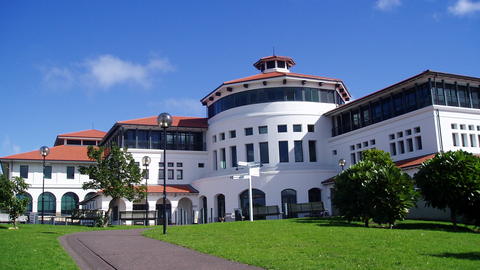
Massey University is special among New Zealand universities on account of its capacity to deliver research-driven teaching and research training on three campuses in Auckland, Palmerston North and Wellington. International students who come to Massey find a warm, friendly place to study and an academic atmosphere where they are understudies inspired to exceed expectations. Massey has a wide scope of scholarships for both undergraduate and postgraduate students which are at present accessible for application. Some courses are MS, MIM, B.E./B.Tech, MBA/PGDM, M.E./Tech, BBA, M.Des, MFA.
4. University of Otago

The University of Otago was established in 1869under an act of the Otago Provincial Council. Initially, the university was provided with 100,000 acres of land and the authority to award degrees in medicine, arts, music, and law. The university started operations in July 1871 with just three faculty members and originally used a building on the site of John Wickliffe House located on Princess Street. Currently, the university has been divided into four academic departments; Otago Business School, Division of Health Sciences, Division of Humanities and Division of Sciences. The university has four campuses across New Zealand. Situated in Dunedin, the main campus houses central administration, Otago Business School and the departments of sciences, humanities and health sciences. Popular courses offered in Health Sciences, Humanities, Business, Life Sciences, Philosophy, Psychology and so on.
5. Victoria University of Wellington

Victoria University of Wellington was formed in 1897 by passing an act in the parliament. It was named after Queen Victoria because it was the 60th anniversary of the Queen’s coronation in 1897. The university has around 17000 enrolled students, out of which around 4000 are international students. Some courses are MS, MIM, B.E./B.Tech, MBA/PGDM, M.Arch.
Academic Requirements
1. Undergraduate: Completion of high school with a high academic record, equivalent to New Zealand Year 13.
2. Postgraduate: A relevant Bachelor’s degree from a recognized university.
3. Doctoral: A Master’s degree with a research proposal.
4. Portfolio: Required for arts, design, or architecture programs.
English Language Proficiency
1. IELTS: Overall band score of 6.0–6.5, with no band less than 5.5 or 6.0.
2. TOEFL: iBT score of 79–90.
3. PTE: Minimum score of 56–58.
1. Valid Passport
2. Academic Transcripts & Certificates
3. Proof of English Language Proficiency
4. Statement of Purpose (SOP)
5. Letters of Recommendation (LOR)
6. Resume/CV
7. Passport-sized Photograph
1. Information Technology (IT) & Computer Science: Focused on cybersecurity, data science, and AI, with high demand for skilled professionals.
2. Engineering: Crucial for infrastructure development, offering high salary prospects ($75,000–$130,000+ NZD).
3. Healthcare & Nursing: Specialized nursing, mental health, and clinical health science programs, often leading to rapid residency.
4. Business & Management: Including MBAs and specialized degrees in data analytics, marketing, and HR, offered by world-class business schools.
5. Professional Accounting: Highly popular for international students aiming for permanent residency (PR).
6. Agriculture & Agribusiness: New Zealand is a global leader, focusing on sustainable practices and technology.
7. Construction Management & Architecture: High demand for project managers, quantity surveyors, and architects.
1. Manaaki New Zealand Scholarships (Government Funded)
2. University of Auckland International Student Scholarships
3. Victoria University of Wellington – Tongarewa Scholarship
4. AUT International Excellence Scholarship
5. University of Otago Doctoral Scholarships
1. Tuition Fees: Undergraduate fees range from NZD 25,000 to NZD 55,000, while postgraduate degrees cost between NZD 20,000 and NZD 45,000. PhD candidates pay significantly less, typically NZD 6,500–9,000 yearly.
2. Proof of Funds: For visa purposes, students must show at least NZD 20,000 per year to cover living expenses.
1. Work Hours: Most students can work up to 25 hours per week during the academic year.
2. Unlimited Work: Master’s by research and PhD students have no restriction on work hours.
3. Holiday Work: Students can work full-time during scheduled university holidays.
4. Visa Requirements: Your student visa must explicitly allow work, usually linked to courses lasting at least two years or that are for-profit.
1. Registered Nurse
2. Software Developer / Engineer
3. Civil Engineer / Structural Engineer
4. ICT Security Specialist / Cybersecurity Analyst
5. Secondary School Teacher
6. Construction Project Manager
7. General Practitioner/ Doctor
8. Quantity Surveyor
9. Mechanical Engineer
10. Data Scientist / Analyst
11. Accountant
12. Early Childhood Teacher
13. Electrician
14. Physiotherapist
15. DevOps Engineer
16. Agricultural Consultant / Scientist
17. Environmental Scientist
18. Marketing Specialist / Manager
19. Chef / Culinary Manager
20. Automotive Technician
1. Work-Life Balance & Relaxation: A relaxed, “Kiwi” lifestyle prevails, offering a peaceful environment that encourages a strong balance between studying and enjoying life.
2. Outdoor Adventure & Nature: Opportunities for hiking (tramping), surfing, and exploring beaches, snow-capped mountains, and fjords are part of everyday life.
3. Welcoming Cultural Atmosphere: Friendly, approachable people and a welcoming atmosphere make it easy for international students to fit in.
4. Flexible Accommodation Options: Popular choices include safe, social university halls of residence, independent private renting, and immersive homestays.
5. Quality Education & Small Classes: Universities focus on practical learning, with smaller class sizes allowing for tailored, focused attention from instructors.