
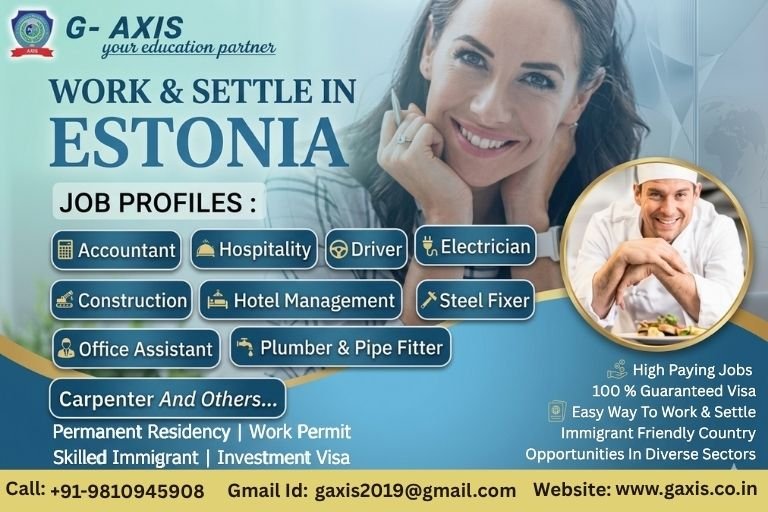
Estonia, officially the Republic of Estonia, is a Northern European country in the Baltic region, bordering the Baltic Sea, Russia, and Latvia. Estonia is iconic for being the world’s most advanced digital society (e-Residency, paperless governance) and a leading startup nation. It is renowned for its well-preserved UNESCO-listed Tallinn Medieval Old Town, pristine nature with over 2,000 islands, vast forests/bogs, and a strong, vibrant sauna and singing culture.
Estonia is widely considered a very safe, stable, and modern country for working and settling, especially for professionals in the technology, engineering, and digital services sectors. It is frequently ranked as one of the safest places in Europe, boasting a low crime rate and a high quality of life.
1. Official name: Republic of Estonia
2. Location: Northern Europe, situated on the eastern shore of the Baltic Sea. It is bordered by the Gulf of Finland to the north, Russia to the east, and Latvia to the south.
3. Area: Approximately 45,339 sq km (17,505 sq miles).
4. Capital: Tallinn
5. Currency: Euro (€); Estonia adopted the euro on 1 January 2011.
6. Languages: Estonian.
7. Economy: Estonia has a high-income, tech-driven economy, ranking around 101st-103rd globally by nominal GDP but 37th–40th in GDP per capita.
8. Total population: Estimated at 1,362,954 as of 1 January 2026.
Permanent residence in Estonia is a long-term, indefinite residency status allowing foreign nationals to live, work, and access social benefits similarly to citizens. Generally obtained after five years of legal, temporary residence, it requires applicants to have a registered address, stable income, health insurance, and pass a B1-level Estonian language exam.
EU/EEA citizens in Estonia are nationals of EU member states, Iceland, Liechtenstein, Norway, and Switzerland who enjoy free movement, allowing them to live, work, and reside there without a visa or residence permit for up to 3 months. They must register their residence in the population register within 3 months to secure temporary residence.
Key details for EU/EEA citizens in Estonia:
1. Definition: Citizens of the 27 EU member states, plus Iceland, Liechtenstein, and Norway. Switzerland is treated similarly regarding free movement.
2. Rights: They have the right to work, study, or reside in Estonia based on EU law, without needing a work permit.
3. Registration: While they can stay for up to 3 months on a valid travel document/ID card, they must register their residence at the local municipality within 3 months to obtain a formal right of residence.
4. Permanent Residence: After 5 years of uninterrupted legal residence, they can acquire a permanent right of residence.
5. Family Members: Non-EU/EEA family members can join them but must comply with specific visa/residence permit requirements.
Non-EU/EEA citizens in Estonia are foreign nationals from countries outside the European Union, European Economic Area, or Switzerland who require a specific visa (e.g., D-visa for up to 365 days) or temporary residence permit to live, work, study, or conduct business legally. These individuals must generally meet immigration quotas, show proof of income, and have valid health insurance.
Key details regarding Non-EU/EEA citizens in Estonia:
1. Residence Permits: Temporary permits are issued for work, study, or family reunification, often valid for up to 5 years.
2. Work Requirements: To work long-term, a residence permit is required, which may necessitate a labor market test to prove no suitable EU candidate is available. Short-term employment registration is possible for shorter stints.
3. D-Visa: A long-stay (D) visa allows a stay of up to 365 days within 12 consecutive months for various purposes, including digital nomadism.
4. Investment/Business: Foreigners can obtain residence permits by investing at least €65,000 in a business or operating as a self-employed person with a €16,000 investment.
5. Permanent Residency: After 5 years of living in Estonia with a temporary permit, they may apply for a long-term residence permit.
Investing and settling in Estonia involves obtaining a temporary residence permit through business, usually requiring a minimum investment of €65,000 (€16,000 for self-employment) or €1 million for major investments, allowing a 5-year residency that can lead to permanent residence or citizenship. Key routes include the startup visa (no minimum investment), general business investment, or e-Residency for digital business management.
1. Favourable Tax System: Estonia has no corporate income tax on retained or reinvested profits. Tax is only applied (typically at 20%) when profits are distributed as dividends.
2. e-Residency Program: Non-residents can obtain a digital ID, allowing them to establish and manage a fully compliant EU company 100% online from anywhere in the world.
3. Fast and Low-Cost Setup: Companies can be registered in just a few hours. The state fee is €265, and minimal share capital (as low as 1 cent) is required.
4. EU Market Access: As an EU member state, Estonian companies can easily operate within the European Single Market.
5. Digital Infrastructure: Almost all government services are available online, offering a transparent, efficient, and low-bureaucracy environment.
Key Visa Types
1. Schengen Visa (Type C): For short stays (up to 90 days in a 180-day period).
2. Long-Stay Visa (Type D): For study, work, or temporary residence (up to 365 days in 12 months).
3. Airport Transit Visa: For transiting through Schengen airports.
1. Application Form: Duly completed and signed.
2. Passport: Issued within the last 10 years, valid for at least 3 months after departure, with at least 2 blank pages.
3. Photographs: Two recent, passport-sized, color photos.
4. Travel Insurance: Valid for all Schengen countries with minimum coverage of €30,000.
5. Proof of Travel: Confirmed return flight tickets and detailed itinerary.
6. Accommodation: Hotel booking, rental agreement, or invitation letter.
7. Financial Means: Bank statements for the last 3-6 months, salary slips, and Income Tax Returns (ITR).
8. Employment Proof: No Objection Certificate (NOC) from employer, or business registration for self-employed.
1. Identify Visa Type: Determine if you need a Type C (Schengen) or D (Long-stay) visa.
2. Gather Documents: Collect all necessary, translated documents.
3. Book Appointment: Schedule an appointment at the nearest VFS Global center (for Type C) or Estonian Embassy (for Type D).
4. Submit Application & Biometrics: Attend the appointment in person to submit documents and provide fingerprints.
5. Pay Fees: Pay the visa fee and service charge.
Working in Estonia is considered very good for skilled professionals, offering a high quality of life, a booming digital/tech startup scene, and a low cost of living compared to Western Europe.
Key Aspects of Working in Estonia:
1. Top Industries: High demand exists for IT specialists, engineers, logistics professionals, healthcare workers, and in the thriving startup sector.
2. Quality of Life & Work-Life Balance: The country emphasizes a, flexible working hours, short commutes, and proximity to nature. It is one of the safest countries with low corruption levels.
3. Digital Society: 100% of public services are online, offering a smooth, paperless experience for residents.
4. Financials: While salaries are competitive, the cost of living—including housing—is generally lower than in countries like Germany or France.
5. Family & Benefits: It is family-friendly, with excellent education and healthcare, plus social security benefits.
1. Software Developer
2. Cybersecurity Specialist
3. Data Analyst/Scientist
4. DevOps Engineer
5. AI & Machine Learning Engineer
6. Mechanical Engineer
7. Electrical Engineer/Fitter
8. Nurse/Nursing Professional
9. General Practitioner/Doctor
10. Healthcare Assistant/Caregiver
11. Heavy Truck and Lorry Driver
12. CNC Machine Operator
13. Welder
14. Construction Supervisor
15. Logistics Coordinator/Supply Chain Manager
16. Special Needs Teacher
17. Early Childhood Educator
18. Accountant/Financial Auditor
19. Digital Marketing Specialist
20. Sales Executive/Account Manager
1. Average Salary: The average gross monthly salary is around €1,754, reflecting a growing economy with high living standards.
2. Minimum Wage: As of 2026, the minimum gross salary is €900 per month (or €5.36 per hour) for a 40-hour work week.
3. High-Demand Sectors: IT professionals (software engineers, DevOps, security specialists) are the highest earners, often making €4,000–€6,000 per month.
An Estonia work visa (primarily the Long-Stay Type D Visa) allows non-EU nationals to live and work in Estonia for up to 365 days within a 12-month period. It requires a job offer from an Estonian employer, registration of short-term employment, and application through an Estonian embassy.
1. Long-Stay (Type D) Visa: For employment lasting up to 365 days within 12 consecutive months. Suitable for shorter or temporary work assignments.
2. Temporary Residence Permit (TRP) for Employment: Issued for long-term employment (up to 2-5 years) and is renewable. This requires approval from the Estonian Unemployment Insurance Fund and usually requires the job to pay at least the Estonian average annual wage.
3. EU Blue Card: A specific residence and work permit for highly qualified professionals (e.g., IT, engineering, healthcare) from outside the EU who have a higher education qualification and a high salary offer.
4. Startup Visa: Designed for founders of startups operating in Estonia, valid for up to 2 years with the possibility of extension.
5. Digital Nomad Visa: Allows location-independent workers, freelancers, and employees of foreign companies to live and work in Estonia for up to one year.
6. Short-Stay (C-type) Visa: A Schengen visa for short-term,90-day, or less, business-related activities, such as meetings or conferences.
1. Job Offer: A formal, documented job offer from an Estonian employer is required.
2. Employment Registration: The employer must register short-term employment with the Police and Border Guard Board before the employee starts working.
3. Documentation: Valid passport, health insurance, and proof of sufficient funds are necessary.
4. Process: Applications for D-visas are typically submitted in person at an Estonian embassy or authorized service provider.
A good lifestyle is a proactive, balanced way of living that combines nutritious eating, regular physical activity, 7-8 hours of sleep, and effective stress management (meditation/hobbies) to boost physical and mental well-being. It involves avoiding addictions, maintaining hygiene, building healthy relationships, and fostering a positive mindset.
1. Nutrition: Consuming a balanced diet rich in fruits, vegetables, and lean proteins while limiting processed foods, sugar, and alcohol.
2. Physical Activity: Engaging in at least 30 minutes of exercise (walking, yoga, stretching) most days to maintain fitness.
3. Sleep & Recovery: Prioritizing 7-8 hours of quality sleep to improve immunity and mental health.
4. Mental Well-being: Managing stress through mindfulness, meditation, and setting boundaries to avoid burnout.
5. Sustainability: Making gradual, consistent changes rather than drastic, temporary ones to ensure long-term success.
can help – fill in your details and we’ll call you back.

Chat Now