Albania is a mountainous Balkan country in Southeastern Europe, featuring a stunning Adriatic and Ionian coastline. It is a developing nation with a unique language, transitioning from communism to a growing tourism-focused economy. its stunning “Maldives of Europe” beaches along the Ionian Riviera, dramatic Accursed Mountains, and rich history, including UNESCO-listed Ottoman towns like Gjirokastër and Berat. It is known for its warm hospitality, intense 40-year communist isolation, coffee culture, and unique language.
Albania is increasingly considered a good, affordable, and safe European destination to live and work, especially for digital nomads, retirees, or those with foreign income. Albania is welcoming, and has low rates of violent crime, making it a popular, including solo travelers.
1. Official name: Republic of Albania
2. Location: Southeastern Europe, situated on the Balkan Peninsula. It is bordered by Montenegro (NW), Kosovo (NE), North Macedonia (E), and Greece (S). It has coastlines along the Adriatic and Ionian seas.
3. Area: Approximately 28,748 square kilometres (11,100 sq mi).
4. Capital: Tirana
5. Currency: Albanian Lek (ALL)
6. Languages: Albanian
7. Economy: A developing open-market economy transitioning from a centrally planned system. Major sectors include tourism, agriculture (olives, wheat), and natural resources (oil, gas, chrome). It is an EU candidate and a member of NATO.
8. Total population: approximately 2.75 million
Relocating to Albania offers a low cost of living (up to 60% lower than some Western European countries), Mediterranean climate, and a welcoming, growing expat community. Citizens from the US, EU, and other nations can stay visa-free for 90 days, with residency required for longer stays.
Marrying an Albanian citizen involves a civil or religious ceremony that is legally recognized in Albania, with no specific residency requirements for foreign nationals. Couples must submit documents like passports, birth certificates, and, if applicable, proof of single status or divorce to the Office of Civil Status at least 11 days before the marriage.
1. Age and Capacity: Both partners must be at least 18 years old (or have court approval for ages 16-18) and possess the legal capacity to marry.
2. Documentation: Required documents typically include valid passports, birth certificates, and proof of single status (such as a freedom to marry certificate). These may need to be translated and notarized.
3. Registration: The marriage must be registered at the local Office of Civil Status in the district where the Albanian partner resides.
An Albanian residence permit is required for stays exceeding 90 days within 180 days, offering a pathway to permanent residency after five consecutive years of legal residence.
Types of Permits:
1. Temporary: Valid for 3 months, 6 months, 1 year (renewable up to 5 times), or 2 years (renewable once).
2. Permanent: Granted after 5 years of continuous, legal, and registered residency.
3. Special Cases: Includes investors (e.g., €2 million investment), digital nomads, and pensioners.
1. Short-term Permits (Type A & B): Issued for 3, 6, or 12 months, renewable up to five consecutive times.
2. Long-term/Renewal Permits: 2-year permits, which can be renewed once.
3. Permanent Residence (Type C): Allowed after 5 years of continuous legal residence.
4. Digital Nomad/Mobile Workers: Initially granted for up to 1 year, often under a “Unique Permit” system.
5. Blue Card AL: Renewable permit for highly qualified workers.
6. US Citizens: Eligible for a 5-year first-time residence permit.
A temporary residence permit in Albania is an official document issued by the Regional Directorate of Borders and Migration for foreign nationals planning to stay, work, study, or live in the country for longer than 90 days within a 180-day period. It is required for extended stays, typically granted for 3, 6, 12 months, or up to 2 years, renewable for up to five years.
Key Aspects of Albania Temporary Residence Permits
1. Purpose: Required for work, study, family reunification, retirement, or owning property.
2. Application: Must be applied for after entering with a long-stay Type D visa (or if visa-free), usually within the first 90 days of arrival.
3. Validity & Renewal: Permits are generally issued for 3–12 months, with some options lasting 2 years. They can be renewed, and after 5 years of legal, continuous residence, a permanent permit can be sought.
4. Requirements: Typically, you must provide a valid passport, proof of financial stability, accommodation (rental contract or property ownership), and a criminal background check.
5. Process: Applications can be started electronically via the e-Albania portal and submitted to the Border and Migration Office.
Family reunification in Albania is a legal process allowing foreign nationals legally residing in the country (with a residence permit of at least one year) or Albanian citizens to bring their family members to live with them. It covers spouses, minor children, and sometimes dependent parents or siblings, often requiring proof of sufficient income, accommodation, and health insurance.
Immigration to Albania is increasingly considered a “good” option, particularly for remote workers, retirees, and investors from Western countries, due to a combination of extremely low costs of living, high safety levels, and favorable, welcoming policies. While it offers a high quality of life for a fraction of Western costs, it also presents challenges like navigating bureaucracy and a language barrier.
Here is an explanation of why immigration to Albania is considered advantageous:
1. Low Expenses: Daily expenses can be up to 60% lower than in Western Europe. A furnished, downtown apartment in Tirana can range between €250–€600 per month.
2. Affordable Lifestyle: Food, local products, and dining out are very affordable, with restaurant meals costing €5–€10.
3. Property Ownership: Foreigners can easily own property, which is relatively inexpensive compared to other Mediterranean destinations.
4. Visa-Free Access: Citizens of many countries, including the US, can enter Albania visa-free and stay for up to one year (365 days) without needing a residence permit.
5. Residency for Expats: Albania offers various types of residency permits for work, study, family reunification, or retirement.
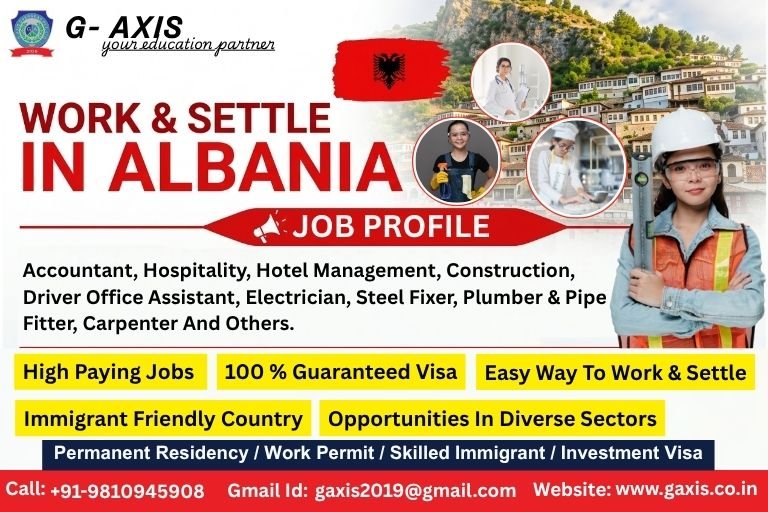
Working in Albania is accessible for foreigners, requiring a formal job offer and a work permit, which typically takes about 30 days to approve. It is popular for its low cost of living, growing tourism/IT sectors, and safe environment, with a standard 40-hour work week. You will need both a work permit and a residence permit to live there legally.
Key Aspects of Working in Albania:
1. Job Market & Sectors: High demand exists for skilled workers (electricians, tailors, drivers) and positions in tourism, IT, and construction.
2. Cost of Living: Daily expenses are very low, with meals often costing under
3. and affordable rent.
4. Work Environment: The culture is generally direct and practical, with a relaxed, Mediterranean lifestyle.
5. Safety & Culture: It is considered a safe country, with a strong sense of community.
6. Legal Requirements: Non-citizens usually need work and residence permits for stays longer than three months.
1. Waiters and Counter Service Staff
2. Hotel Managers
3. Chefs/Cooks
4. Tour Guides
5. Housekeeping/Cleaners
6. Travel Consultants/Agents
7. Receptionists
8. Construction Workers/Laborers
9. Electricians
10. Plumbers
11. Welders (MIG, TIG, ARC)
12. Carpenters
13. Reinforcing Ironworkers
14. Site Supervisors/Foremen
15. Mechanics
16. Aluminium Workers
17. Software Developers/Engineers
18. IT Specialists/Support
19. Web Designers/Developers
20. Data Analysts
21. Cybersecurity Experts
22. UI/UX Designers
23. Sales Representatives/Agents
24. Call Center Operators (German/Italian/English)
25. Marketing Specialists/Social Media Managers
26. Accountants/Bookkeepers
27. Human Resources Specialists
28. Nurses/Caregivers
29. Pharmacists
30. Warehouse Workers/Logistics Staff
1. Type A (Airport Transit Visa): Required for passing through the international zone of Albanian airports without entering the country.
2. Type C (Short-Stay Visa): The standard visa for tourism, business, medical, or cultural visits. It allows a stay of up to 90 days within a 180-day period.
3. Tourist Visa: For leisure, often requiring an invitation or hotel booking.
4. Business Visa: For professional activities, usually requiring an invitation from an Albanian company.
5. Type D (Long-Stay Visa): For stays longer than 90 days, designed for individuals planning to apply for a residence permit upon arrival.
6. Work Visa: For employment, requiring proof of a work contract.
7. Student Visa: For education purposes.
8. Family Reunion/Other: For long-term residence reasons.
Working permits in Albania are increasingly attractive due to a growing economy, lower cost of living, and a straightforward, roughly 30-day approval process. They are required for employment exceeding three months and offer a pathway to residency, making them a viable option for international professionals seeking to work in the Balkans.
1. Requirement: Mandatory for non-EU/EEA citizens working >90 days.
2. Validity: Usually 1 year, with options for renewal.
3. Process Time: Typically 30 days to 12 weeks for approval.
1. Type A: For employees (standard, seasonal, intra-company transfers, athletes).
2. Type B: For self-employed individuals or investors.
3. Type C: For special cases/contractual services.
4. Type D: For long-term/permanent work.
| Type of documents |
| Application from the employer according to the standard form; |
| All documents from the company that will employ him/her; (Documents of EPPC, like fiscal status with zero obligations, financial statements, labor declarations, etc.) |
| Employment contract; |
| Passport copy of the employee; |
| Authorization from the employer to submit documents; |
| Diploma/Graduation/Professional Certificate for the employer knowledge; (Translation and notarizing are needed. Tariff is around 20-30 USD. Depending on text and language.) |
| Five photos. |
Lifestyle in Albania is widely considered very good, offering a high quality of life with a low cost of living. It is characterized by a relaxed pace, Mediterranean climate, and stunning, diverse scenery from beaches to mountains. It’s a safe country with a strong sense of community and fresh, organic food, though infrastructure can still be developing.
Key Aspects of Lifestyle in Albania:
1. Cost of Living: One of the most affordable countries in Europe, allowing for a comfortable lifestyle on a lower budget.
2. Safety: Generally considered a safe country with a strong, welcoming community.
3. Nature and Climate: Offers a sunny, Mediterranean climate with easy access to both pristine beaches (Adriatic/Ionian coasts) and wild mountains, perfect for hiking and water sports.
4. Food and Health: High-quality, local, and organic produce is easily available at low prices.
5. Culture and Pace: A slower, more relaxed pace of life compared to Western Europe. The evening “xhiro” (stroll) is a common, popular daily tradition.
6. Convenience: Good, central location in the Balkans, making it easy to travel to neighboring countries like Greece, Italy, and Montenegro.
If you need to have your ex-pat personnel legally work for you in Albania without setting up your business entity, trust us to assist you with work permits and immigration support, and then employ your ex-pats locally on your behalf.
Contact our team to let us take up your foreign employees’ immigration matters and relieve you of the responsibility of getting a work permit by working with our local partners to organize and obtain all the necessary permits, as well as provide you with a detailed update on the progress of the process.
can help – fill in your details and we’ll call you back.
Chat Now