
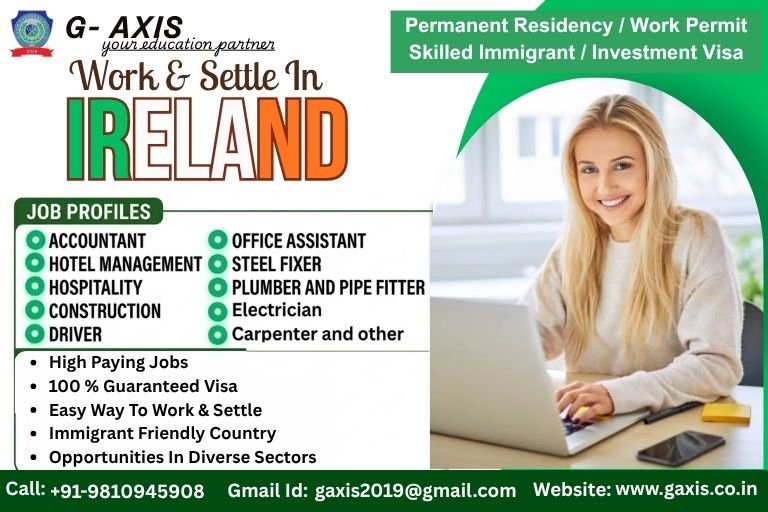
Ireland is a beautiful, green island nation in Northwestern Europe, nicknamed the “Emerald Isle”. It is divided into two parts: the independent Republic of Ireland (most of the island) and Northern Ireland (part of the UK). Known for its friendly people, ancient Celtic culture, and dramatic coastal scenery, it is a modern, scenic country.
Ireland is a top destination for work and settlement, offering a fast-growing, English-speaking economy with high demand for skilled professionals in IT, engineering, and healthcare. It boasts a high quality of life, a welcoming culture, and a pathway to citizenship. However, it has a high cost of living and a severe housing shortage. Ireland is considered one of the safest countries in the world, consistently ranking high on the Global Peace Index (2nd or 3rd between 2022–2025). It is famous for its warm hospitality, pub culture, Guinness, traditional music, and literary giants such as James Joyce and Oscar Wilde.
1. Official name: Republic of Ireland
2. Location: Ireland is an island nation located in Northwestern Europe. It occupies five-sixths of the island of Ireland in the North Atlantic Ocean, sharing a land border with Northern Ireland (part of the UK).
3. Area: 84,421 km²
4. Capital: Dublin is the capital and largest city.
5. Currency: Euro (€)
6. Languages: The official languages are Irish (Gaeilge) and English. English is the most widely spoken language.
7. Economy: Ireland has a highly developed, fast-growing economy heavily focused on technology, pharmaceuticals, and services. It serves as a major global hub for innovation, hosting headquarters for companies like Google and Apple.
8. Total population: 5.44 million.
1. Eligibility Requirements: Requires 5 years of legal, “genuine and effective” employment (e.g., Stamp 1 or 4).
2. Benefits: You can work for any employer without a permit, and in some cases, your family may accompany you.
3. Application: It is not automatic; you must apply to the Irish Immigration Service Delivery (ISD).
4. Difference from Citizenship: It does not give you an Irish passport or the right to vote in national elections, but it is a step toward citizenship.
5. Renewal: While called “permanent,” this permission usually needs to be renewed every 5 years.
1. Residence Duration: A minimum of 60 months of legal, reckonable residence.
2. Permit Type: Holders of Critical Skills Employment Permits or General Employment Permits are eligible.
3. Employment Status: You must be legally employed at the time of application.
4. Excluded Categories: Time spent on student visas (Stamp 2), trainee visas, or as an Intra-Company Transfer (ICT) is generally not included in the 5-year calculation. Self-employed individuals are not eligible under this specific scheme.
5. Exceptions: Researchers and certain critical skill holders may be eligible to apply after 2 years.
To get Permanent Residency (PR) in Ireland, you generally need to legally reside and work for five years (60 months) on eligible visas, such as the Critical Skills or General Employment Permit, followed by an application for Long-Term Residency (Stamp 4).
1. Completed Application Form: Long Term Residency Form.
2. Valid Passport: Full color copy of your current passport (biometric page) and any expired passports covering the 5-year period.
3. Irish Residence Permit (IRP) / GNIB Card: Copy of the front and back of your current card, and copies of previous cards.
4. Employment Permits: Copies of all employment permits (e.g., Critical Skills Employment Permit, General Employment Permit) held during your stay.
5. Proof of Employment: A letter from your current employer dated within the last 3 months, confirming your role, salary, and commencement date.
6. Proof of Residence: Documents showing 60 months of legal, uninterrupted residence (e.g., previous tenancy agreements, utility bills).
1. When to Renew: Apply online via the ISD portal within 12 weeks of your current IRP card’s expiry date.
2. Eligibility: Generally requires 5 years of legal, reckonable residence (e.g., holding a Stamp 1 or Stamp 4).
3. Long Term Residency (LTR): If you hold an Employment Permit for 5 years (or 2 years for Critical Skills), you may apply for LTR, which grants another 5 years without needing a new work permit.
4. Process: Submit documents (passport, current IRP, proof of residence) online. No in-person appointment is needed for renewals.
5. Fees: The registration fee is €300, payable by credit/debit card, with exemptions for certain categories like minors or spouses of Irish citizens.
6. If Expired: If you apply before your card expires, you are legally permitted to stay while waiting for the new card.
Working in Ireland is highly advantageous due to its fast-growing economy, particularly in tech, pharma, and finance, offering high-paying roles. It features a strong, English-speaking, employee-centric culture with ~25 annual leave days and, as an EU member, provides high safety and quality of life.
Key Reasons Why Working in Ireland is Good:
1. Thriving Job Market: With under 5% unemployment, Ireland is a hub for multinationals like Google, Meta, and Pfizer, offering abundant, high-paying, and in-demand roles.
2. Strong Work-Life Balance: The standard work culture emphasizes a 9-to-5:30 schedule, with many companies providing 25 days of annual leave.
3. High Quality of Life & Safety: Ireland, particularly Dublin, offers excellent safety, public services, and a high standard of living.
4. English-Speaking EU Hub: It is the only English-speaking country in the European Union, making it accessible for international professionals.
5. Support for Foreign Workers: The country offers various work permits, including the Critical Skills Employment Permit, and a 2-year post-study work visa for graduates.
6. Employee Rights: Strong legal protection against unfair dismissal and mandated benefits like paid leave.
The Irish job market in 2026 remains resilient with over 2.8 million people employed and strong opportunities in IT, healthcare, engineering, and finance. While the unemployment rate is around 4.9% and growing, demand for skilled professionals persists, particularly in Dublin and for international candidates.
1. High-Demand Sectors: Technology (AI, Cybersecurity)PharmaceuticalsFinancial Services, and Renewable Energy are the primary drivers of growth.
2. Talent Shortages: Specific skill shortages are causing wage increases in engineering and specialized tech roles.
3. Regional Growth: While Dublin holds the most opportunities, jobs are growing across the country.
1. Software Developer/Engineer
2. Data Analyst/Scientist
3. Cybersecurity Analyst
4. DevOps Engineer
5. IT Support and Infrastructure Engineer
6. UX/UI Designer
7. Machine Learning/AI Specialist
8. Mechanical Engineer
9. Bioprocess/Chemical Engineer
10. Electrical/Electronic Engineer
11. Construction Project Manager
12. Automation Engineer
13. Renewable Energy Engineer
14. Trainee Accountant
15. Financial Analyst/Risk Analyst
16. Management Consultant
17. Digital Marketing Specialist
18. Supply Chain Manager
19. Registered Nurse
20. Pharmaceutical Quality Assurance (QA) Specialist
Life in Ireland offers a high-quality, balanced lifestyle known for safety, warm culture, and strong career opportunities, particularly in tech. Residents enjoy a relaxed pace of life, beautiful green landscapes, excellent work-life balance, and a rich social pub culture, although it comes with high costs of living and frequent rain.
Key Aspects of the Good Lifestyle in Ireland:
1. High Safety & Stability: Ireland is considered one of the safest countries in the world, with low violent crime rates. It provides a peaceful, secure environment suitable for families and individuals.
2. Work-Life Balance: The average full-time work week is around 39 hours, often shorter than other countries, allowing for ample personal time. There is also a strong culture of paid time off.
3. Welcoming Culture: Irish people are known for being friendly, talkative, and helpful, making it easier for expats to feel at home.
4. Job Opportunities: Particularly in Dublin and other cities, there are strong career prospects, especially in the IT and multinational sectors.
5. Natural Beauty & Travel: The country features stunning, scenic landscapes, and its location makes it convenient to travel to other European destinations.
6. Social & Cultural Life: The pub culture is central to social life, offering a warm, conversational, and musical atmosphere.
If you come from a country outside the EU you will need an employment permit to work in Ireland prior to your arrival in the country. If you’re coming to live with family, in some cases you may not need one. There are nine different types of permit including a general permit and a critical skills permit.
can help – fill in your details and we’ll call you back.
Chat Now