
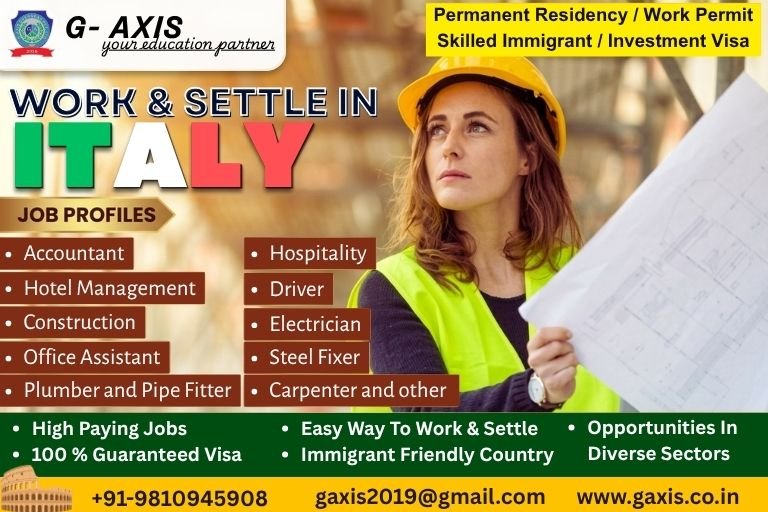
Italy, officially the Italian Republic, is a boot-shaped peninsula in Southern Europe, renowned for its rich history as the center of the Roman Empire and the Renaissance. Italy is globally iconic for its immense contributions to art, history, and cuisine, boasting the highest number of UNESCO World Heritage sites. One of the most unique fun facts about Italy is that in the region of Abruzzo, there’s a free wine fountain where visitors can help themselves to local red wine. This unique attraction, known as the “Fontana del Vino,” is located along the famous Cammino di San Tommaso pilgrimage route. Italian luxury is a commitment to craftsmanship that has been passed down through generations. Brands like Gucci, Prada, and Versace, alongside leather goods connoisseurs such as Bottega Veneta, have set global standards for quality and elegance.
Italy is a popular, cost-effective destination for international students, offering high-quality education at public universities with low tuition fees, often supported by scholarships. While it boasts a rich culture and, in many cases, English-taught programs, students face challenges like,, challenging housing, bureaucratic delays, and limited job opportunities.
1. Official name: Italian Republic (Repubblica Italiana).
2. Location: Located in South-Central Europe on the boot-shaped Italian Peninsula. It shares land borders with France, Switzerland, Austria, and Slovenia, and contains the enclaved microstates of Vatican City and San Marino.
3. Area: Total area is approximately 301,340 km² (116,350 sq mi).
4. Capital: Rome
5. Currency: Euro (€)
6. Languages: Italian
7. Economy: Italy has a highly developed industrial economy, ranked as the 8th largest in the world by nominal GDP as of 2026 estimates ($2.712 trillion nominal; $3.967 trillion PPP).
8. Total population: Estimated at 58,851,000 for early 2026.
1. Affordable Quality Education: Public universities offer low tuition fees, often ranging between €900 to €4,000 annually, making it highly attractive for Indian students.
2. Easy Visa & Startup Programs: Italy offers specialized visas, including the “Investor Visa” for entrepreneurs and “Elective Residence” permits for those with high passive income, designed to boost foreign investment.
3. Lower Cost of Living: Compared to the UK or USA, Italy offers a more pocket-friendly lifestyle, with cities like Milan, Rome, and Bologna providing diverse, affordable housing options.
4. Growing Indian Community: With over 157,695 NRIs and 45,357 Persons of Indian Origin (PIO), the community is large and established, offering a sense of home.
5. Strategic Mobility Agreements: The India-Italy Migration and Mobility Agreement facilitates easier, legal, and faster pathways for skilled workers and students.
6. High-Quality Healthcare System: Residents benefit from excellent, state-of-the-art healthcare facilities, reducing long-term living expenses.
7. Rich Cultural & Social Life: Immigrants are immersed in centuries-old traditions, from vibrant festivals to renowned cuisine, providing a high quality of life.
8. Central Location for European Travel: Being in Italy allows easy, convenient access for traveling throughout Europe.
9. Safety and Lifestyle: Many cities, such as Verona, offer a safe, relaxed environment, making it suitable for families and retirees.
10. Cultural Familiarity & Community Support: A strong presence of Indian community groups, including Gurudwaras and Hindu temples, helps in easy integration.
Settling in Italy offers an unmatched quality of life characterized by a relaxed, slow-paced culture, world-renowned cuisine, rich history, and stunning, diverse landscapes. It is attractive for its lower cost of living compared to the US or UK, excellent healthcare, and opportunities for a cultural, artistic, and community-focused lifestyle.
1. Lifestyle and Culture: Italy prioritizes a slower pace of life, focusing on family, friends, and enjoying the present moment, which is appealing for retirees and those seeking to escape corporate stress.How to Obtain Permanent Residence in Italy
2. Exceptional Quality of Life & Culture: Italy offers a slower, more enjoyable pace of life, emphasizing family, community, and enjoying the moment.
3. Rich History and Art: As home to the most UNESCO World Heritage sites, residents live surrounded by 2,500 years of culture, art, and architecture.
4. World-Famous Cuisine: Access to, arguably, the best food in the world, emphasizing fresh, local, and seasonal ingredients, often at a lower cost than in the UK.
5. Affordable Cost of Living: Generally, daily expenses, including groceries, dining out, and housing (especially in smaller towns), are cheaper than in major hubs like London or New York.
6. Diverse Landscapes and Climate: Varied scenery from the Mediterranean coast and Amalfi to the Alps, paired with a mild, Mediterranean climate.
7. Excellent Healthcare: Italy offers high-quality public healthcare that is often free or very low-cost for residents, with accessible private options.
8. Strategic Location in Europe: Positioned centrally in the Mediterranean, offering easy travel access to the rest of Europe, North Africa, and the Middle East.
9. Warm and Welcoming People: A hospitable culture where social interaction, family, and community are highly valued.
10. Lifestyle Benefits (Fashion & Leisure): Access to world-class fashion, football, and a culture that celebrates “la dolce vita” (the sweet life)
The “best” place in Italy depends on your travel style, but most travelers agree that Rome, Florence, and Venice are the ultimate must-see destinations for a first-time trip.
1. 5-Year Legal Residency: You must hold a valid residence permit and have lived in Italy for five consecutive years. Absence from Italy cannot exceed 6 consecutive months or 10 months total in 5 years
2. Language Proficiency: Passing an A2 level Italian language test is mandatory, unless you hold a degree from an Italian university, or a diploma from an Italian secondary school.
3. Income Requirement: You must demonstrate a stable, legal income that is not lower than the annual social allowance (approximately €538.68 per month in 2025, or ~€6,000-€7,000 annually).
4. Documentation: Required documents include a valid passport, current residence permit, tax returns, proof of income, and a criminal record certificate.
5. Housing Requirement: Evidence of suitable accommodation, such as a rental contract or a certificate of habitability
6. Application Process: The application is submitted via the “yellow kit” at authorized Post Offices.
7. Golden Visa (Investment): High-net-worth individuals can obtain residency through investments in Italian companies (€500k+), innovative startups (€250k+), philanthropic donations (€1M+), or government bonds (€2M+).
8. Exceptions to Language Test: Holders of research permits or those with recognized higher education degrees in Italy do not need to take the language test.
9. Housing Requirement: Proof of suitable accommodation (housing certificate).
10. Income Requirement: Annual income must be at least equal to the annual social security allowance (approx. €6,542.51 for one person in 2025, increasing for family members).
Quick Facts
| Temporary residence permit types | – seasonal work, – self-employment, – study, – medical treatment, – family reunification, – refugee status, – humanitarian grounds, – elective residence |
| Time needed to obtain the temporary residence permit (approx.) | up to three months |
| Temporary residence permit validity | It depends on the reason of issuance and it varies from min. 6 months to max. 2 years |
| Documents for obtaining temporary residence | – the temporary residence application form, – the passport, – the visa, – recent photographs, – proof of paying a fee of EUR 14.62, – document attesting the purpose of stay |
| Mandatory registrations with state authorities (i.e. with the population/municipality register) | The state authorities vary based on the type of permit needed; they can refer to: – local municipalities, – Patronati offices, – Prefectures, – post office |
| Dependents can join the temporary permit holder | No – not available for first-time applicants (those who renew their residency from Italy can bring their family members in certain situations) |
| Temporary or permanent residency for investment purposes | Yes, for certain categories of visas (investor program) |
| Minimum temporary residence before applying for permanent residence | After 5 years of uninterrupted stay in Italy |
| Documents for obtaining permanent residence | – passport or identity document, – copy of the income statement, – evidence on housing in Italy, – the current residence documents, – proof of payment of fees |
| Naturalization requirements | – permanent residency for 5 years, – overall stay in Italy of 10 years, – tax residency in Italy, – proof of having at least the minimum income established in Italy, – proof of knowing the Italian language, culture and history |
| Citizenship after permanent residence | One can apply for citizenship after 5 years of being a permanent resident. |
Key Eligibility Criteria:
1. Legal & Continuous Residency: Minimum 5 years of legal stay. Absences cannot exceed 6 consecutive months or 10 months total in 5 years.
2. Valid Permit: You must hold a valid residence permit for work, family, or other eligible reasons (excludes study, tourism, or short-term permits).
3. Language Test: A2 level Italian language proficiency is required, though some exceptions apply.
4. No Criminal Record: A clean criminal record in Italy is required
Italy has two main categories of residence permits:
Temporary Residence Permit Types (1-2 Years):
1. Work: Employed (lavoro subordinato), Seasonal, or Self-employed (lavoro autonomo).
2. Family: Family reunification (ricongiungimento familiare or family cohesion).
3. Study/Training: For university, vocational training, or internship.
4. Other: Elective residence, Scientific Research, Medical Care, Voluntary Work, and Humanitarian Grounds.
5. Pending Employment: For recent graduates or job seekers.
Long-Term Permits:
EU Long-Term Residence Permit (Soggiornanti di Lungo Periodo): Formerly known as Carta di Soggiorno, this is available after 5 years of legal residence, provided the applicant meets income and housing requirements.
Applying for an Italian visa is straightforward when broken down into clear, manageable steps. For short trips (up to 90 days), you will apply for an Italy Schengen Visa. The easiest and most official way to do this in your location is through VFS Global, the authorized partner of the Embassy of Italy.
The absolute easiest way to marry in Italy is to have a symbolic wedding ceremony in Italy and handle the legal paperwork separately at your local city hall at home. This approach allows you to completely bypass Italy’s complex, time-consuming bureaucratic requirements while still enjoying your dream Italian celebration.
Feature | Symbolic Ceremony + Legal at Home (Easiest) | Legal Civil Ceremony in Italy |
Legally Binding? | No, done in your home country | Yes, recognized globally |
Italian Paperwork | None | Extensive (Consulates, Prefettura, Town Halls) |
Venue Freedom | Any beach, villa, garden, or rooftop | Only Town Halls or government-approved venues |
Officiant | Anyone (friend, family member, celebrant) | Must be a certified Italian official |
Lead Time | No legislative restrictions | 3 to 6 months minimum |
Working in Italy can be a good option for international workers, particularly in sectors like IT, engineering, healthcare, and tourism, which are experiencing high demand. Italy offers a strong work-life balance (36–40 hour workweek), generous paid leave, and comprehensive social security benefits. However, navigating the bureaucracy, potential language barriers, and lower salary levels compared to northern Europe can be challenging.
Key Considerations for International Workers in Italy:
1. Job Market & In-Demand Roles: There is a high demand for skilled professionals in IT, software development, engineering, nursing, and, crucially, a need for workers in agriculture and hospitality.
2. Work-Life Balance & Culture: Italy emphasizes a high quality of life, with typical 40-hour workweeks, 22–26 days of paid leave, and a strong, legally protected, and respectful work environment.
3. Visas & Legal Procedures: Italy plans to issue 500,000 work visas between 2026 and 2028, offering seasonal, standard, and digital nomad options.
4. Salary & Benefits: Salaries are generally lower than in other Western European countries but can be supplemented by 13th or 14th-month paychecks. Northern Italy typically offers higher wages.
5. Language: While English is used in multinational companies, proficiency in Italian is essential for integration and, often, for daily job tasks.
Jobs in Italy are generally safe regarding physical security and workplace regulations, with a strong focus on employee welfare, including paid leave, healthcare, and unemployment benefits. However, the Italian job market is highly competitive, features a rigid hierarchical structure, often offers lower wages, and has high unemployment rates, particularly in the south and among young people. Italy’s employment rate reached a record high of 62.5%, with a 1.7% job vacancy rate. Average annual salaries are approximately €32,450 (approx. €2,700 monthly).
Italy is currently facing significant labor shortages, with approximately 38.3% of job openings remaining unfilled. High-demand sectors include healthcare, engineering, and IT.
Healthcare & Social Welfare
1. Nurses: Massive demand with an estimated 39,000 vacancies.
2. Doctors & Specialists: General practitioners and specialized medical staff.
3. Physiotherapists: Increasing demand due to an aging population.
4. Pharmacists: High difficulty in finding qualified candidates.
5. Social Welfare Workers: Essential roles in community and elder care.
6. Biologists/Life Science Specialists: Critical for research and healthcare diagnostics.
Engineering & Technical Services
1. Software Developers: Core demand in the IT sector.
2. Civil Engineers: Key for infrastructure and urban development.
3. Mechanical Engineers: Critical for Italy’s manufacturing and automotive industries.
4. Data Scientists: Growing need for analytical talent in business and tech.
5. Cybersecurity Engineers: High demand for protecting digital infrastructure.
6. Automation & Mechatronics Technicians: Essential for advanced manufacturing.
7. Solar/Renewable Energy Engineers: Focus on Italy’s green energy transition.
Tourism & Hospitality
1. Chefs & Cooks: High demand in the restaurant and luxury hotel sectors.
2. Waiters & Bartenders: Frequent vacancies, particularly in tourist hubs.
3. Hotel Receptionists: Demand for multilingual staff.
4. Concierge: High-end roles in luxury tourism.
5. Airport Representatives: Particularly English-speaking roles in cities like Catania.
6. Tour Guides/Digital Assistants: Increasing use of digital platforms for tourism.
Business, Finance & Management
1. Accountants: Estimated 33,000 vacancies.
2. Financial Analysts: Roles in banking and corporate finance.
3. Human Resources Managers: Estimated 22,000 vacancies.
4. Business Consultants: Demand for strategy and management consultants.
5. Sales Representatives: High demand across various industries.
6. Marketing Managers: Especially those with digital and international experience
Skilled Trades & Logistics
1. Metalworking Professionals: One of the sectors with the highest vacancy rates (52.6%).
2. Logistics Managers: Key for supply chain efficiency.
3. Construction Foremen/Workers: High demand in civil and real estate construction.
4. Textile & Footwear Specialized Workers: Italy’s fashion sector remains a major employer.
5. Warehouse Supervisors: Demand driven by e-commerce growth.
| 1. Engineering: €42,692 – €77,500 | |
| 2. Healthcare (Nursing): €46,449 – €78,000 | |
| 3. Banking & Financial Services: €39,100 – €75,210 | |
| 4. Commercial Airline Pilot: €56,000 | |
| 5. Lawyer: €40,000 | |
| 6. Management Consultant: €38,774 | |
| 7. Sales & Marketing: €68,220 | |
| 8. Information Technology (Frontend Developer): €1,444 – €4,245 per month | |
| 9. Hospitality (Waitstaff): €7–€10 per hour | |
| 10. General Worker: €22,850 | |
| 11. Factory Worker: ~€17,000 – €21,000 (with high variance by city) | |
| key other details | |
| 1. Experience: An entry-level general worker may earn €17,698, while a senior-level worker earns closer to €26,988. | |
| 2. Gender Pay Gap: In some sectors, such as banking and insurance, the pay gap is significant, though it is lower in others. | |
| 3. Taxation: A €30,000 annual salary often results in roughly €20,000–€21,000 net (in-hand) after taxes and social security contributions. | |
1. Nulla Osta (Work Authorization): The employer must obtain this authorization from the Sportello Unico per l’Immigrazione (SUI) in Italy.
2. Signed Employment Contract: A formal contract outlining the job description, salary, and duration.
3. Valid Passport: Must be valid for at least three months beyond the visa duration and have at least two blank pages.
4. Visa Application Form: Completed and signed long-stay (Type D) visa form.
5. Proof of Accommodation: Documentation showing where you will live in Italy (e.g., rental agreement, hotel booking, or host declaration).
6. Proof of Financial Means: Bank statements or proof of income to show you can support yourself.
7. Health Insurance: Coverage for medical expenses in Italy, usually with a minimum of €30,000.
8. Qualifications: Diplomas, certificates, or proof of professional experience.
9. Photographs: Recent passport-sized photos.
Application process
1. Secure a Job: A legally registered Italian employer must offer you a position.
2. Employer Applies: The employer submits the request to the local SUI.
3. Apply for the Visa:you must apply for the visa at the Italian Embassy/Consulate or VFS Global in your home country.
4. Entry and Residence Permit: Upon entering Italy, you have 8 days to apply for a residence permit.
1. Subordinate Work: For standard employees with a company.
2. EU Blue Card: For highly qualified workers with a university degree and a high salary.
3. Seasonal Work: For temporary, seasonal jobs.
4. Digital Nomad/Remote Worker: For individuals working remotely for companies outside Italy.
The lifestyle in Italy is generally considered very high quality, known for la dolce vita—a slower, relaxed pace emphasizing family, food, and culture. Key highlights include excellent Mediterranean cuisine, rich historical sites, strong community, and a focus on work-life balance. However, challenges include, slow bureaucracy and, for some, lower wages compared to other Western European countries.
Do you want to work & settle in Italy? Seek the right guidance from G-Axis, the World’s No.1 Overseas Consultant.
can help – fill in your details and we’ll call you back.


Chat Now