
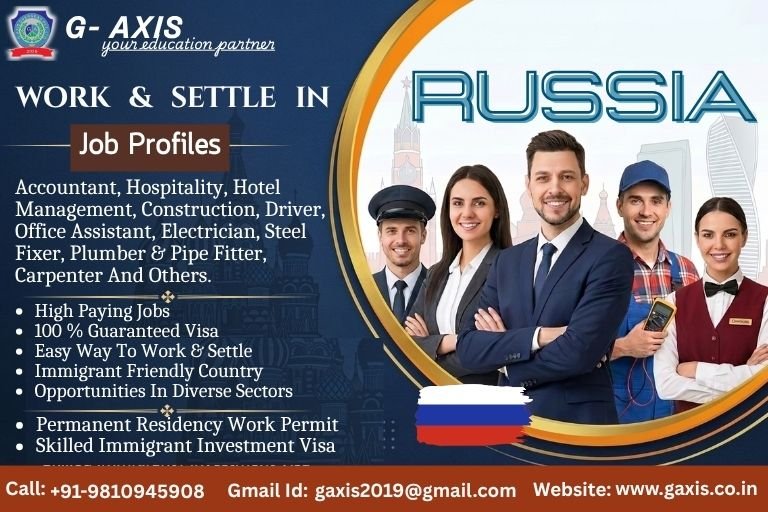
Russia is the world’s largest country by land area, spanning Eastern Europe and Northern Asia with 11 time zones. It is a massive transcontinental state bordered by 14 countries, boasting vast natural resources and a population of over 140 million. Russia is ranked as the 4th largest economy in the world.
Russia is best known as the world’s largest country by land area, spanning eastern Europe and northern Asia, and for its immense natural resources, particularly oil and natural gas. it offers stable income, low-cost living, and employment in sectors like construction and manufacturing.
1. Official Name: Russian Federation
2. Location: Transcontinental country spanning Eastern Europe and Northern Asia
3. Area: Approximately 17.1 million sq km (6.6 million sq mi)
4. Capital: Moscow
5. Currency: Russian Ruble (RUB)
6. Languages: Russian (official), plus over 35 recognized regional languages
7. Economy: Emerging economy, high-income, 9th largest by nominal GDP (as of 2025/2026), with high dependence on oil/gas and mining, and significant military-industrial expansion
8. Total Population: Estimated at approximately 143.4 million (as of mid-2026)
Russian citizenship is obtained through birth, descent, or naturalization. Standard naturalization requires 5 years of permanent residence, Russian language proficiency, financial stability, and renunciation of prior citizenship. Simplified paths exist for marriage, high-skilled professionals, or Russian-speaking descendants.
1. Higher Economic Opportunities & Wages: Immigrants, particularly from Central Asia (Tajikistan, Uzbekistan, Kyrgyzstan), move for higher salaries compared to their home countries.
2. Labor Shortage & Demographic Decline: A shrinking working-age population (by over 1 million annually in some periods) creates high demand for both low-skilled and high-skilled labor.
3. Simplified Citizenship Procedures: Changes to policies allow workers to become citizens after five years of work and language proficiency, making relocation attractive.
4. Visa-Free Entry for CIS Citizens: Citizens from many Commonwealth of Independent States (CIS) countries do not need a visa, easing the relocation process.
5. High Demand in Key Industries: Labor is heavily needed in sectors like construction, transportation, maintenance, and industrial production.
6. Better Standard of Living: Russia offers better public services, infrastructure, and urban living standards for citizens from neighbouring CIS nations.
7. Cultural & Historical Ties: Many immigrants, particularly from Ukraine and other former Soviet republics, have family links, a common culture, and share the Russian language.
8. Regional Security & Stability: Some workers migrate to escape political instability, armed conflict, or economic crises in their home countries.
9. Educational Opportunities: Russian universities attract many international students who often settle in Russia after graduation.
10. Repatriation Programs: The Russian government offers specialized programs and incentives for ethnic Russians or Russian speakers living abroad to move to Russia.
Applying for Russian citizenship involves a rigorous process requiring five years of continuous permanent residency, a clean criminal record, Russian language proficiency, and financial stability.
Key Requirements & Eligibility
1. Residency: Must hold a permanent residence permit (PRP) and have lived in Russia for five continuous years (absences must not exceed three months per year).
2. Language & Culture: Must pass a test demonstrating Russian language proficiency, as well as knowledge of Russian history and the Constitution.
3. Financial Stability: Proof of legal income to support oneself.
4. Renunciation: Must renounce foreign citizenship, although exceptions apply for certain countries with dual citizenship treaties.
Application Process
1. Obtain Permanent Residency (PRP): Secure a permanent residence card before starting the citizenship application.
2. Gather Documents: Prepare the application form, passport, birth certificate, marriage/divorce certificates, proof of income, and the Russian language certificate.
3. Submit Application: Submit all documents to the local MVD regional office.
4. Wait for Decision: Applications undergo a legal review before final approval.
Russia is good best country for work and settle. Russia is emerging as a potential destination for foreign workers, particularly from India, offering high job availability, low cost of living.
Job Opportunities: High demand exists for skilled tradespeople, engineers, IT professionals, and roles in the oil and gas sector.
The job market in Russia as of early 2026 is experiencing a significant shortage of labor, with an estimated need for 11 million skilled workers by 2030.
1. Civil Engineer
2. Crane Operator
3. MIG Welder
4. CNC Operator
5. Heavy Truck Driver
6. Drywall Fitter
7. Pipe Fitter
8. Construction Foreman
9. Structural Fitter
10. Warehouse Assistant/Supervisor
11. IT Software Developer
12. Sales Manager/Development Specialist
13. Nurses/Healthcare Staff
14. Customer Service Specialist
15. English Language Tutor/Teacher
16. Interpreter/Translator (English-Russian)
17. Electrical Technician
18. Packaging Worker
19. Waitress/Hospitality Staff
20. Technical Support Engineer
1. Minimum Wage: 27,093 RUB (effective Jan 1, 2026).
2. Average Salary Range: 37K–131K RUB (80% of employees).
3. Top 10% Earners: Over 131,151 RUB monthly.
4. Key Sectors: High demand and high pay in IT, Engineering, Finance, and Education.
Here is an easy breakdown in 5 points:
1. Strict Hierarchy (Top-Down): Russian workplaces are hierarchical, meaning senior leaders make the decisions, and employees are expected to follow instructions from supervisors without questioning them publicly.
2. Formality and Formality: Initial business interactions are formal, conservative, and polite. Using professional titles, dressing well, and maintaining direct eye contact during handshakes is important to show respect.
3. Relationships Matter (Trust-Based): Russians often prefer doing business with people they know and trust rather than solely relying on company reputation. Personal connections (svyasi) are vital, and relationships are built over time, often during long meetings or after-hours socializing.
4. Punctuality and Long Hours: While they may be flexible with their own time, Russians highly value punctuality from visitors and expect professional discipline. Workdays can be long, often starting early, and 40-hour weeks are standard, with a 9-to-6 routine being common.
5. Direct Communication: When discussing business, Russians tend to be direct and to the point. However, they may be cautious or reserved in initial interactions until trust is established.
A Russian work visa is a mandatory document for foreign nationals seeking to perform paid work in Russia, sponsored by a Russian employer. It enables legal residence and employment, typically lasting 90 days to three years, often requiring a formal invitation, an approved work permit, and a certified HIV test.
1. standard Single-Entry (90 days),
2. Multiple-Entry (1 year),
3. Highly Qualified Specialist (HQS) visas (up to 3 years).
Requirements: A valid job offer from a Russian-registered employer is mandatory, as the company must sponsor the work permit.
Required Documents:
1. Original Official Invitation from the FMS.
2. Passport valid for at least 18 months from the visa issue date.
3. HIV Test (AIDS) Certificate taken within three months.
4. Completed Visa Application Form.
5. Health Insurance policy valid in Russia (minimum €30,000).
6. Process: The employer must first secure a permit to employ foreign labor, then obtain a work permit for the individual before inviting them.
7. Fees & Time: Consular fees and a service fee for VFS Global apply, with processing often taking 10-30 days.
1. Extensive Central Heating: Most apartment buildings are centrally heated from October to April, ensuring homes are warm and cozy (24/7) regardless of how low the temperature drops outside.
2. Convenient 24/7 Amenities: Supermarkets, convenience stores (like Dixy), and pharmacies are often located within walking distance and many are open 24/7, offering high convenience.
3. Affordable and Fast Internet/Mobile: Cellular data and home internet are very cheap and high-quality, with widespread coverage even in remote areas.
4. Efficient Public Transport: Large cities have fast, reliable, and inexpensive public transport networks (metro, buses, trams), making car ownership unnecessary.
5. Affordable Beauty and Health Services: High-quality beauty services (nails, hair, skincare) and private dentistry are available at very fair prices compared to many Western countries.
6. Digitalized Everyday Life: Advanced digital infrastructure allows for easy, fast payments for utilities, online shopping, food delivery, and banking through mobile apps.
7. Strong Cultural Life: Access to world-class museums, theaters, and cinemas is affordable and common, with a culture that deeply values education, literature, and the arts.
8. The Dacha Culture (Nature and Relaxation): Many Russians have a dacha (country cottage), which provides a simple way to escape to nature, grow fresh vegetables, and relax in the countryside.
9. Rich and Diverse Cuisine: Russia offers diverse cuisine with a strong emphasis on fresh vegetables, grains, and fruits. Many people prefer to buy locally grown produce at markets.
10. High Safety in City Centers: Major cities like Moscow and St. Petersburg are generally considered safe, with significantly lower rates of visible street crime or homelessness compared to many Western counterparts.
We provide all types of jobs based on your qualification and skill. Contact us for more information and VISA apply
can help – fill in your details and we’ll call you back.
Chat Now